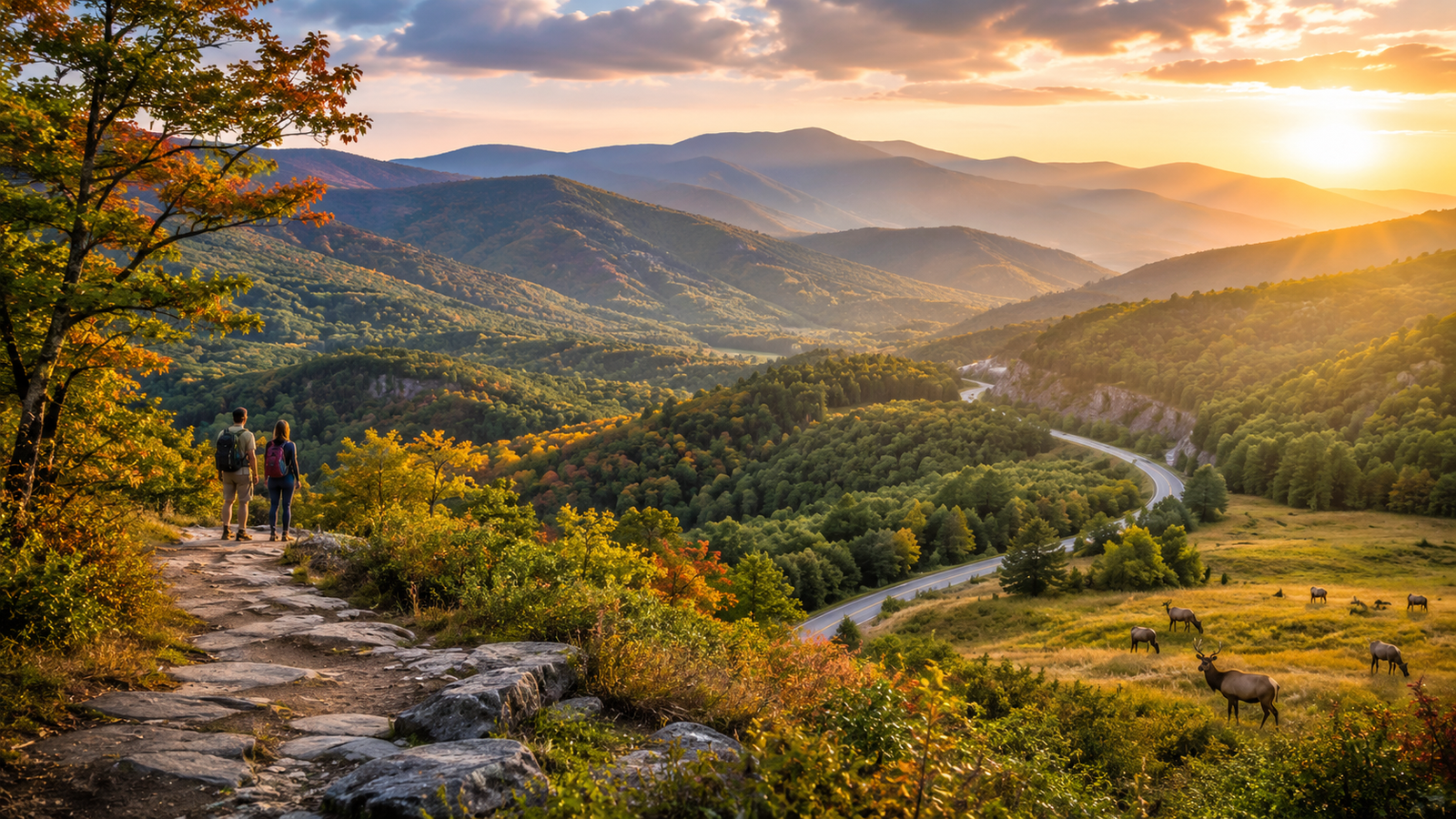
The best East Coast national parks offer far more variety than many travelers expect. You can hike granite mountains above the Atlantic in Maine, watch black bears in the Southern Appalachians, paddle through an old-growth floodplain, explore the world’s longest known cave system, or snorkel above coral reefs in Florida and the U.S. Virgin Islands.
This guide uses “East Coast” broadly to include official national parks in the eastern United States and Atlantic-Caribbean region. That includes coastal parks as well as nearby Appalachian, Great Lakes, and inland destinations commonly included in eastern U.S. road trips.
Our top overall choice is Acadia National Park for its combination of coastal scenery, hiking, cycling, and scenic driving. The Great Smoky Mountains is the strongest option for wildlife and forest landscapes, while Shenandoah is ideal for an accessible mountain road trip.
Travelers still deciding which part of the country to explore can also compare these destinations with our guide to the 15 Best National Parks in the USA for First-Time Visitors.
Best East Coast National Parks at a Glance
| Acadia | Maine | Coastal hiking and scenic drives | 3–4 days |
| Great Smoky Mountains | North Carolina and Tennessee | Wildlife, forests, and waterfalls | 3–5 days |
| Shenandoah | Virginia | Skyline Drive and mountain hiking | 2–4 days |
| Everglades | Florida | Wildlife and wetlands | 2–3 days |
| New River Gorge | West Virginia | Hiking, rafting, and adventure | 2–3 days |
| Virgin Islands | St. John, U.S. Virgin Islands | Beaches, snorkeling, and history | 4–6 days |
| Mammoth Cave | Kentucky | Cave tours and family exploration | 2–3 days |
| Dry Tortugas | Florida | Remote islands, snorkeling, and history | 1–2 days |
| Congaree | South Carolina | Old-growth forest and paddling | 1–2 days |
| Biscayne | Florida | Boating, reefs, and marine life | 1–2 days |
| Cuyahoga Valley | Ohio | Waterfalls, cycling, and easy access | 1–2 days |
| Indiana Dunes | Indiana | Lake beaches and diverse hiking | 1–2 days |
1. Acadia National Park, Maine
Best Overall East Coast National Park
Best for: Coastal hiking, scenic roads, cycling, photography, and first-time visitors
Suggested visit: Three to four days
Best general season: Late spring through fall
Suggested visit: Three to four days
Best general season: Late spring through fall
Acadia National Park provides one of the strongest combinations of mountain and ocean scenery anywhere in the eastern United States.
The park protects rocky Atlantic headlands, forests, lakes, islands, and historic roads. Visitors can explore 158 miles of hiking trails, 45 miles of carriage roads, and 27 miles of historic motor roads.
Popular experiences include:
- Driving Park Loop Road
- Hiking Cadillac Mountain
- Walking the Ocean Path
- Cycling the carriage roads
- Watching waves at Thunder Hole
- Visiting Jordan Pond
- Hiking the Beehive or Precipice Trail
- Photographing sunrise and coastal scenery
Acadia has trails for different ability levels. Ocean Path offers an easier coastal walk, while the Beehive and Precipice routes feature exposed iron rungs and are not suitable for all visitors.
Planning tip
A separate vehicle reservation is required to drive Cadillac Summit Road during the reservation season, generally from late May into October. The reservation is separate from the park entrance pass and must be purchased online rather than at the mountain entrance.
Acadia is extremely popular, so begin major hikes early and consider using the seasonal Island Explorer transit service where practical.
Why Acadia ranks first
Few East Coast parks offer this much variety within one compact destination. In a single day, visitors can hike a granite summit, walk beside the Atlantic, cycle a wooded carriage road, and watch sunset from a rocky shoreline.
2. Great Smoky Mountains National Park, North Carolina and Tennessee
Best for Wildlife and Forest Scenery
Best for: Black bears, waterfalls, historic buildings, mountain drives, and fall scenery
Suggested visit: Three to five days
Best general season: Spring and fall
Suggested visit: Three to five days
Best general season: Spring and fall
Great Smoky Mountains National Park protects more than 522,000 acres, divided between Tennessee and North Carolina.
Its landscapes include misty ridges, old-growth forest, streams, waterfalls, wildflowers, historic cabins, mills, and high-elevation viewpoints.
Wildlife possibilities include black bears and salamanders, as well as elk, particularly around Cataloochee and Oconaluftee.
Top experiences include:
- Driving the Cades Cove Loop
- Visiting Newfound Gap
- Walking to Clingmans Dome, officially renamed Kuwohi
- Hiking Alum Cave Trail
- Exploring Laurel Falls or Abrams Falls
- Looking for elk near Oconaluftee
- Driving sections of Foothills Parkway
- Visiting historic buildings in Cades Cove
Cades Cove is surrounded by mountains and connected by an 11-mile one-way loop road. It is one of the park’s most popular locations for scenery, historic structures, and wildlife observation.
Fees and parking
The Great Smoky Mountains does not charge a general entrance fee. However, vehicles parked for longer than 15 minutes normally require a valid parking tag. Current options include daily, weekly, and annual tags.
A parking tag does not guarantee a space. Popular waterfalls and trailheads can fill early, particularly during summer and fall weekends.
Wildlife safety
Observe animals from a safe distance, never feed them, and keep food secured. A bear approaching the roadside is not permission to stop in a traffic lane or walk closer for a photograph.
3. Shenandoah National Park, Virginia
Best for Scenic Driving
Best for: Mountain overlooks, accessible road trips, waterfalls, and weekend escapes
Suggested visit: Two to four days
Best general season: Spring and fall
Suggested visit: Two to four days
Best general season: Spring and fall
Shenandoah National Park stretches along Virginia’s Blue Ridge Mountains, only about 75 miles from Washington, D.C.
The park contains more than 500 miles of trails, cascading waterfalls, black bear habitat, wooded hollows, and more than 60 peaks above 3,000 feet.
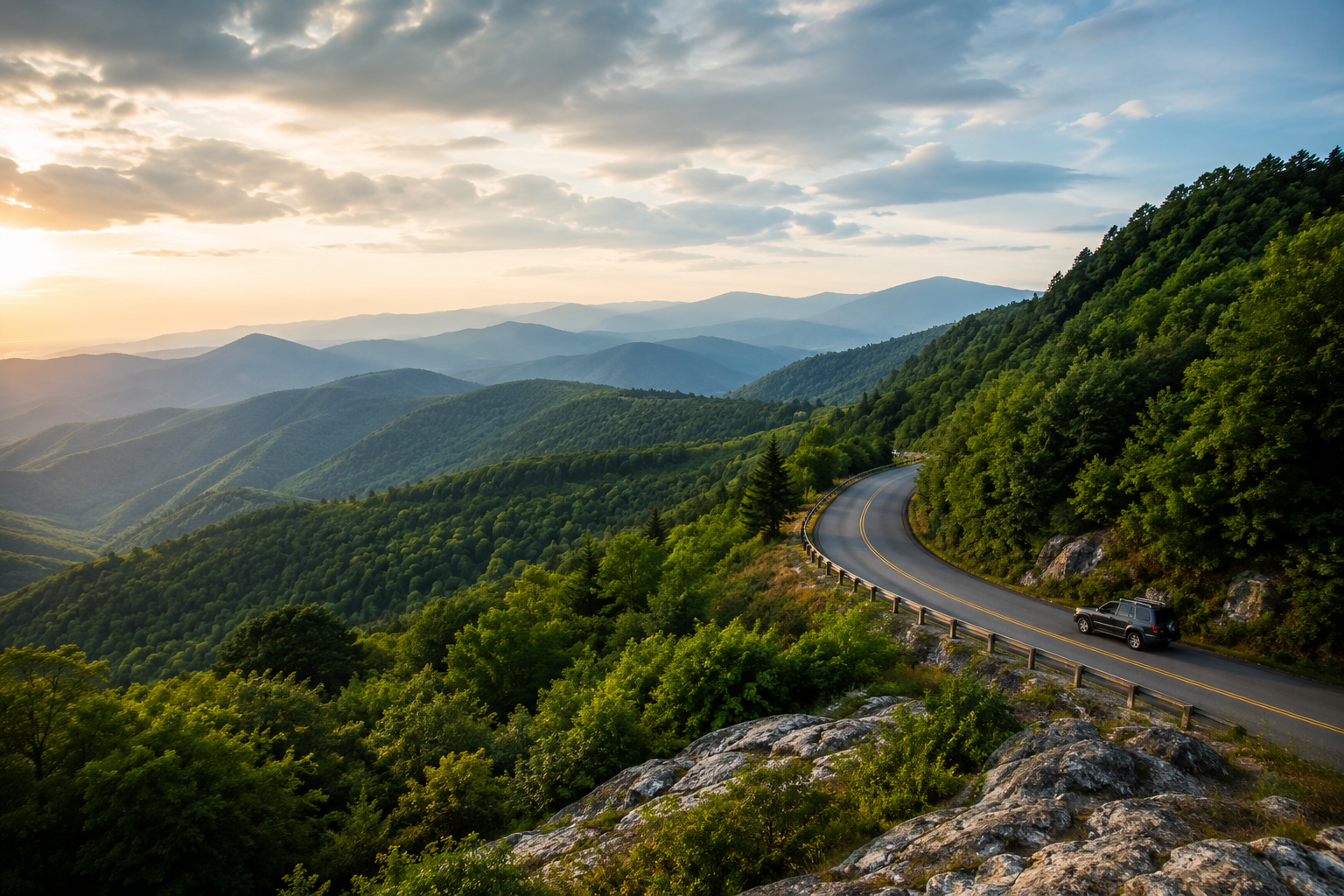
Its defining feature is Skyline Drive, a 105-mile road running along the mountain crest. The road connects four main entrances and provides access to overlooks, campgrounds, visitor facilities, and numerous trails.
Recommended activities include:
- Driving Skyline Drive
- Hiking Hawksbill Mountain
- Visiting Dark Hollow Falls
- Hiking Stony Man
- Exploring Rose River Falls
- Completing the Limberlost Trail
- Watching sunrise from a roadside overlook
- Attempting Old Rag with appropriate preparation
Old Rag is one of the park’s most famous hikes but includes a demanding rock scramble. Day-use tickets may be required during the park’s designated ticket season, in addition to the normal entrance pass. Check current rules before arriving.
Who should visit Shenandoah?
Shenandoah is particularly suitable for travelers who want mountain scenery without venturing deep into a remote wilderness. Skyline Drive offers overlooks and short walks, as well as longer hikes for more active visitors.
4. Everglades National Park, Florida
Best for Wildlife Viewing
Best for: Alligators, birds, paddling, wetlands, cycling, and photography
Suggested visit: Two to three days
Best general season: November through April
Suggested visit: Two to three days
Best general season: November through April
Everglades National Park protects approximately 1.5 million acres of wetland, forest, freshwater, and marine habitats. It was established to protect biodiversity rather than one major geological feature.
The park is not one simple destination. Its three main entrances are located in different cities and are not connected by internal roads. Driving between Shark Valley, the Homestead entrance, and the Gulf Coast area can take considerable time.
Top places to consider include:
- Anhinga Trail
- Shark Valley
- Royal Palm
- Flamingo
- Mahogany Hammock
- Nine Mile Pond
- Gulf Coast and Ten Thousand Islands
Anhinga Trail is one of the easiest places to see alligators, turtles, anhingas, herons, egrets, and other wildlife from an established trail and boardwalk.
Shark Valley offers a paved loop used by cyclists, pedestrians, and tram tours. Flamingo offers access to coastal habitats, boat tours, campgrounds, and paddling opportunities.
Best time to visit
The dry season, generally November through April, brings lower temperatures, reduced mosquito activity, and concentrated wildlife viewing. It is also the park’s busiest period.
Summer is hotter, wetter, and more humid, with frequent thunderstorms and greater insect activity.
Planning tip
Choose one or two park regions instead of trying to visit every entrance in one day. The entrances are too widely separated for a rushed itinerary.
5. New River Gorge National Park and Preserve, West Virginia
Best for Outdoor Adventure
Best for: Hiking, whitewater rafting, climbing, overlooks, and waterfalls
Suggested visit: Two to three days
Best general season: Spring through fall
Suggested visit: Two to three days
Best general season: Spring through fall
New River Gorge protects more than 70,000 acres around a rugged river canyon in southern West Virginia.
The landscape includes sandstone cliffs, waterfalls, historic railroad communities, river overlooks, forest trails, and the New River Gorge Bridge. Activities include hiking, rafting, climbing, mountain biking, fishing, and scenic driving.
Recommended places include:
- Canyon Rim Visitor Center
- Endless Wall Trail
- Long Point Trail
- Grandview
- Sandstone Falls
- Thurmond Historic District
- Fayette Station Road
- The New River Gorge Bridge overlooks
The Endless Wall and Long Point trails provide classic views of the gorge and bridge. Grandview offers broader river bends and overlooks, while Sandstone Falls reveals a very different, wider section of the New River.
The park does not charge an entrance fee.
Who should visit?
New River Gorge is a strong choice for travelers who enjoy active trips but want more flexibility than a fully remote mountain park. The communities around Fayetteville and Beckley provide access to accommodation, restaurants, outfitters, and other services.
Whitewater difficulty varies significantly. Use an authorized outfitter and select a trip appropriate to your experience rather than choosing solely based on the most dramatic photographs.
6. Virgin Islands National Park, U.S. Virgin Islands
Best for Beaches and Snorkeling
Best for: White-sand beaches, coral reefs, hiking, history, and tropical scenery
Suggested visit: Four to six days
Best general season: Winter through spring
Suggested visit: Four to six days
Best general season: Winter through spring
Virgin Islands National Park protects roughly two-thirds of the island of St. John.
The park combines beaches, tropical forest, reefs, historic plantation sites, Indigenous Taino petroglyphs, and trails ranging from easy walks to steep coastal hikes.
Popular experiences include:
- Swimming and snorkeling at Trunk Bay
- Visiting Cinnamon Bay
- Hiking Reef Bay Trail
- Hiking Ram Head Trail
- Walking to Lind Point
- Exploring plantation ruins
- Birdwatching near Francis Bay
- Paddling along a protected coastline
Trunk Bay is the park’s most famous beach and charges an expanded amenity fee, although the national park itself does not charge a general entrance fee.
What makes it different?
Unlike many eastern national parks, the Virgin Islands require island logistics rather than a traditional road trip. Most visitors arrive on St. John by ferry from St. Thomas and use rental vehicles, taxis, or local transportation to reach beaches and trails.
The park is not only a beach destination. Historical sites reflect Indigenous history, European colonization, sugar production, and the lives of enslaved people. Visitors should approach these places as cultural landscapes rather than simply scenic ruins.
7. Mammoth Cave National Park, Kentucky
Best Underground Experience
Best for: Cave tours, families, geology, hiking, and rainy-day exploration
Suggested visit: Two to three days
Best general season: Year-round, depending on tour availability
Suggested visit: Two to three days
Best general season: Year-round, depending on tour availability
Mammoth Cave National Park protects the world’s longest known cave system, along with forest, rivers, rolling hills, and more than 80 miles of surface trails.
More than 400 miles of passages have been documented within the cave system, and exploration continues. The park is also recognized as a UNESCO World Heritage Site and International Biosphere Region.
Cave-tour options vary in length and difficulty. Depending on the schedule, visitors may choose tours focused on:
- Historic passages
- Large chambers
- Domes and dripstone formations
- Lantern-lit routes
- Accessible areas
- Crawling and wild-cave experiences
Tour reservations are strongly recommended because popular departures can sell out weeks in advance. The underground temperature averages around 54°F, so a light layer and sturdy footwear are useful even during summer.
Fees
There is no general fee to enter Mammoth Cave National Park, but cave tours, camping, and certain facilities charge separate fees.
Do not skip the surface.
The park also offers hiking, river paddling, cycling, stargazing, camping, and historic sites. Spending an additional day above ground creates a more complete trip than arriving only for a short cave tour.
8. Dry Tortugas National Park, Florida
Best Remote Island National Park
Best for: Snorkeling, Fort Jefferson, birdwatching, clear water, and remote camping
Suggested visit: One full day or an overnight trip
Best general season: Winter and spring, depending on marine conditions
Suggested visit: One full day or an overnight trip
Best general season: Winter and spring, depending on marine conditions
Dry Tortugas National Park lies approximately 70 miles west of Key West and cannot be reached by car.
Visitors arrive by ferry, seaplane, private boat, or authorized charter. The ferry and seaplane travel to Garden Key, where Fort Jefferson is located.
Top activities include:
- Touring Fort Jefferson
- Snorkeling near Garden Key
- Walking around the fort’s moat wall
- Birdwatching
- Swimming
- Kayaking where permitted
- Primitive camping
- Photographing clear water and historic architecture
Important planning information
Transportation capacity is limited, so ferry and seaplane bookings should be made well in advance.
The park charges an entrance fee. Ferry tickets include park admission, but camping fees are separate. Visitors arriving by private boat generally need to arrange their own entrance pass.
Day visitors have limited island time. Prioritize the fort tour and snorkeling rather than trying to fit every possible activity into a few hours.
Camping provides a quieter experience after day visitors leave, but facilities are primitive, and campers must bring essential supplies.
9. Congaree National Park, South Carolina
Best for Old-Growth Forest and Paddling
Best for: Boardwalks, giant trees, paddling, birds, and quiet nature trips
Suggested visit: One to two days
Best general season: Late fall through spring
Suggested visit: One to two days
Best general season: Late fall through spring
Congaree protects the largest intact expanse of old-growth bottomland hardwood forest remaining in the southeastern United States.
The Congaree and Wateree Rivers regularly move water, nutrients, and sediment through the floodplain, supporting exceptional tree growth and biological diversity.
The easiest introduction is the 2.6-mile Boardwalk Loop, which begins near the Harry Hampton Visitor Center. It passes through bald cypress, tupelo, loblolly pine, oak, maple, and other forest habitats.
Other activities include:
- Paddling Cedar Creek
- Hiking Weston Lake Trail
- Birdwatching on Kingsnake Trail
- Camping
- Attending ranger programs
- Viewing synchronous fireflies when permitted
Congaree hosts a popular synchronous firefly event during a limited period in late spring. Entry to the managed event is controlled by lottery because demand is much higher than capacity.
Flooding and insects
The park lies within an active floodplain. Water levels can close trails and boardwalk sections even when the local weather appears dry. Much of the park is flood-prone, so check current conditions before traveling.
Mosquitoes and ticks are common from mid-spring through mid-fall. Carry insect repellent and inspect clothing after hiking.
Entrance to Congaree is free.
10. Biscayne National Park, Florida
Best for Boating and Coral Reefs
Best for: Snorkeling, boating, diving, fishing, and marine history
Suggested visit: One to two days
Best general season: Winter through spring
Suggested visit: One to two days
Best general season: Winter through spring
Biscayne National Park protects aquamarine water, mangrove shoreline, islands, coral reefs, shipwrecks, and thousands of years of human history near Miami.
Many first-time visitors make the mistake of treating Biscayne like a normal land-based park. The mainland area around the Dante Fascell Visitor Center offers views, exhibits, picnicking, and a short shoreline walk, but the best experiences require getting out on the water.
Guided trips may include:
- Coral-reef snorkeling
- Shipwreck snorkeling
- Scuba diving
- Sailing
- Boca Chita Key cruises
- Jones Lagoon exploration
- Wildlife tours
The park works with authorized operators offering snorkeling, diving, sailing, and sightseeing trips. Advance reservations are advised.
Biscayne does not charge a general entrance fee, although tours, island docking, and camping may cost extra.
Who should choose Biscayne?
Select Biscayne over the Everglades when your main priority is coral reefs, boating, and marine scenery. Choose the Everglades when wildlife observation, wetlands, boardwalks, and cycling are more important to you.
11. Cuyahoga Valley National Park, Ohio
Best for Families and Easy Access
Best for: Waterfalls, cycling, short hikes, scenic rail travel, and weekend trips
Suggested visit: One to two days
Best general season: Spring through fall
Suggested visit: One to two days
Best general season: Spring through fall
Cuyahoga Valley National Park sits between Cleveland and Akron but protects forests, rolling hills, wetlands, farmland, waterfalls, and the winding Cuyahoga River.
Visitors can explore more than 125 miles of hiking trails, including relatively level routes and more challenging paths. The Ohio & Erie Canal Towpath Trail provides a long, accessible corridor through the park.
Popular stops include:
- Brandywine Falls
- Ledges Trail
- Blue Hen Falls
- Towpath Trail
- Beaver Marsh
- Boston Mill Visitor Center
- Covered bridges and historic farms
- Seasonal scenic train excursions
The park does not charge an entrance fee and does not require a reservation for general entry.
Why it works for beginners
Cuyahoga Valley is less logistically demanding than many larger national parks. Visitors can build an enjoyable itinerary around several short walks, a waterfall, a bike ride, and a nearby town without needing to drive across a vast wilderness.
12. Indiana Dunes National Park, Indiana
Best for Beaches and Diverse Habitats
Best for: Lake Michigan beaches, dune hikes, birdwatching, and short family trips
Suggested visit: One to two days
Best general season: Late spring through early fall
Suggested visit: One to two days
Best general season: Late spring through early fall
Indiana Dunes National Park protects 15 miles of Lake Michigan shoreline and approximately 16,000 acres of beaches, dunes, forests, wetlands, and prairies.
The park contains more than 50 miles of trails across 15 separate trail systems. Routes range from short paved walks to more demanding hikes through sand and wooded dunes.
Recommended experiences include:
- Swimming at designated beaches
- Hiking Dune Succession Trail
- Exploring Cowles Bog
- Walking Miller Woods
- Visiting Bailly Homestead
- Watching the sunset over Lake Michigan
- Birdwatching during migration
- Exploring prairie and wetland habitats
National park vs. state park
Indiana Dunes National Park and Indiana Dunes State Park are separate destinations with separate entrance passes and fee systems. A federal park pass does not automatically cover the neighboring state park.
Lake Michigan can produce waves, currents, cold water, and rip-current hazards that feel more like an ocean coastline than an inland lake. Review beach conditions and swim only where conditions are appropriate.
Best East Coast National Parks by Travel Style
Best for hiking
The strongest choices are:
- Acadia
- Shenandoah
- Great Smoky Mountains
- New River Gorge
- Cuyahoga Valley
Acadia provides the most distinctive combination of mountain summits and Atlantic views. Shenandoah offers the largest trail network with convenient road access, while New River Gorge is excellent for cliffside viewpoints.
Best for wildlife
Choose:
- Everglades
- Great Smoky Mountains
- Congaree
- Virgin Islands
- Biscayne
The Everglades provides the most accessible wildlife-viewing opportunities, particularly along Anhinga Trail and around Shark Valley.
Best for scenic drives
Choose:
- Shenandoah
- Great Smoky Mountains
- Acadia
- New River Gorge
Skyline Drive makes Shenandoah the easiest choice for travelers who want repeated mountain overlooks without having to complete difficult hikes.
Best for families
Choose:
- Cuyahoga Valley
- Mammoth Cave
- Acadia
- Indiana Dunes
- Shenandoah
These parks provide a useful mix of shorter trails, visitor facilities, educational experiences, and activities that do not require advanced outdoor skills.
Best for beaches and water
Choose:
- Virgin Islands
- Dry Tortugas
- Biscayne
- Acadia
- Indiana Dunes
The Virgin Islands are the most complete beach destination, while Biscayne and Dry Tortugas are better suited to snorkeling and boating.
How to Choose the Right East Coast National Park
Consider five questions before booking.
What activities matter most?
Choose mountains for hiking, Florida for wildlife and marine experiences, Kentucky for caves, or South Carolina for paddling and old-growth forest.
How much time do you have?
Acadia, the Great Smoky Mountains, and the Virgin Islands deserve several days. Congaree, Cuyahoga Valley, and Indiana Dunes can work well as shorter stops.
Do you need easy road access?
Shenandoah and the Great Smoky Mountains offer extensive scenic driving. Biscayne and Dry Tortugas require boat-based planning to experience their best areas.
What weather can you tolerate?
Northern mountain parks have limited winter access and colder conditions. Southern Florida parks can be hot, humid, and stormy during summer.
Are reservations required?
Requirements vary by activity. Cadillac Summit Road, Mammoth Cave tours, Dry Tortugas transportation, special events, guided boat trips, and selected hikes may require advance booking.
Frequently Asked Questions
What is the best East Coast national park?
Acadia is the best overall choice because it combines Atlantic coastline, mountain hiking, scenic roads, carriage-road cycling, lakes, and accessible visitor services.
Which East Coast national park has the best hiking?
Acadia is strongest for dramatic coastal hikes, while Shenandoah provides more than 500 miles of trails. The Great Smoky Mountains and New River Gorge are also excellent for waterfall, forest, and overlook hikes.
Which East Coast national park has the most wildlife?
The Everglades offers the most accessible wildlife viewing. Visitors may see alligators, turtles, wading birds, fish, and other animals along established trails and waterways.
What is the closest national park to New York City?
Shenandoah, Cuyahoga Valley, and Acadia are among the more practical major national parks for travelers starting in the northeastern United States, depending on driving route. Several National Park Service sites closer to New York are not officially designated “National Parks.”
Are there national parks directly on the East Coast?
Yes. Acadia borders the Atlantic in Maine, while Florida contains the Everglades, Biscayne, and Dry Tortugas. Virgin Islands National Park protects beaches, reefs, and much of St. John in the Caribbean.
Which East Coast national parks are free?
Congaree, New River Gorge, Cuyahoga Valley, Biscayne, Mammoth Cave, and Great Smoky Mountains do not charge a general entrance fee. However, parking, tours, camping, cave tickets, docking, and other activities may still require payment.
What is the best time to visit East Coast national parks?
Spring and fall generally provide comfortable conditions for Appalachian and northeastern parks. Winter and early spring are usually better for southern Florida destinations because temperatures and insect activity are lower.
Can I visit multiple East Coast national parks on one road trip?
Yes, but avoid creating an itinerary that covers too much distance. Practical regional combinations include Shenandoah with New River Gorge, Great Smoky Mountains with Mammoth Cave, or Everglades with Biscayne and Dry Tortugas.
Final Thoughts
The best East Coast national parks are not simply smaller versions of western parks.
They offer their own distinctive landscapes:
- Granite mountains meet the Atlantic at Acadia.
- Ancient forests and wildlife in the Smokies
- Blue Ridge overlooks in Shenandoah.
- Wetlands and alligators in the Everglades
- Whitewater canyons at New River Gorge
- Tropical beaches in the Virgin Islands
- Underground passages at Mammoth Cave
- Remote islands at Dry Tortugas
Choose Acadia for the strongest overall first trip, Great Smoky Mountains for wildlife and forest scenery, Shenandoah for scenic driving, and Everglades for a completely different wetland experience.
The right park is the one that matches your available time, preferred activities, season, and comfort level—not necessarily the destination with the most famous name.
Editorial Research Note
Xplore Terrainz reviewed current information from the National Park Service for each destination. Entrance fees, reservations, road access, transportation, tours, and seasonal conditions can change. Check the official park alerts and current conditions shortly before traveling.