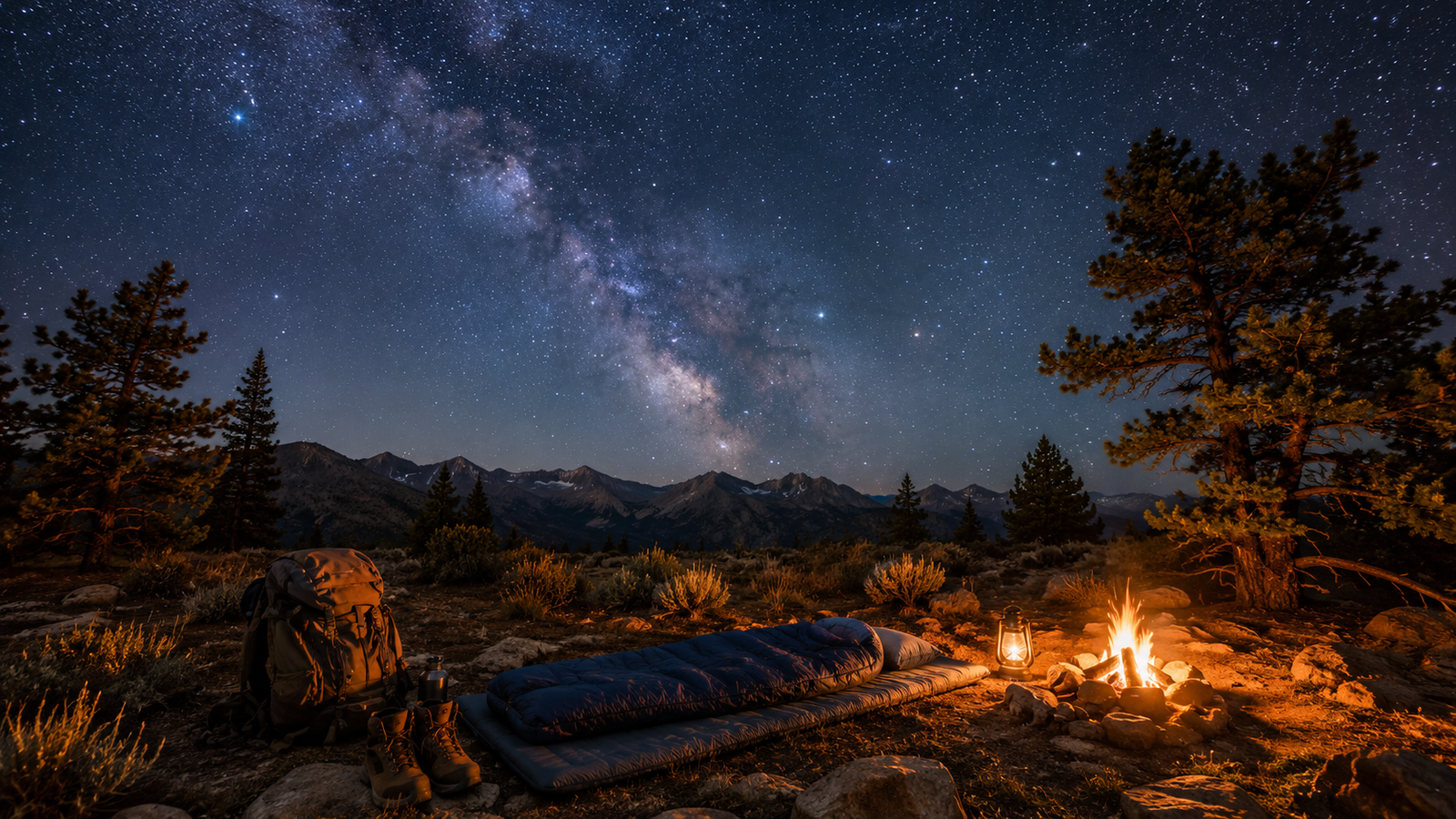
Cowboy camping means sleeping outdoors without setting up a tent or another full overhead shelter. Most people use a groundsheet, sleeping pad, and sleeping bag or quilt while leaving the sky completely open above them.
It can reduce setup time, provide an unobstructed view of the stars, and create a stronger connection with the surrounding landscape. However, it is only suitable when the location is legal, the weather forecast is stable, insects are manageable, and the camper has an emergency shelter available.
For beginners, the safest first cowboy camp is usually a dry night at an established campground or on a short backpacking trip with easy access to a vehicle or trailhead.
Cowboy Camping at a Glance
| Question | Quick answer |
|---|---|
| What is cowboy camping? | Sleeping outdoors without pitching a tent or overhead shelter |
| What do you sleep on? | A groundsheet, insulated sleeping pad, and sleeping bag or quilt |
| Is a bivy required? | No, but a bug bivy or weather-resistant bivy can add protection |
| Is it safe for beginners? | Yes, in suitable weather and a legal, carefully selected location |
| Should you still carry shelter? | Yes, especially in the backcountry |
| What are the biggest risks? | Rain, lightning, cold, insects, wildlife, and unsuitable campsites |
| Where does it work best? | Dry climates, clear nights, established sites, and durable surfaces |
| When should you avoid it? | Unstable weather, heavy insects, extreme cold, bear activity, or flash-flood risk |
What Does Cowboy Camping Mean?
Cowboy camping is a minimalist style of camping in which you sleep directly beneath the open sky rather than inside a tent.
A basic setup usually includes:
- A waterproof or water-resistant groundsheet
- An insulated sleeping pad
- A sleeping bag or quilt
- Appropriate sleep clothing
- A pillow or clothing-filled stuff sack
- A headlamp
- A packed backup shelter
Some campers use a bivy sack around their sleeping system. Traditional bivy sacks are compact enclosures designed to fit around a sleeping bag and pad, while more structured bivy shelters may also protect the head from insects and weather. A fully enclosed bivy feels less open than traditional cowboy camping, but it remains a practical compromise when bugs or dew are concerns.
Cowboy camping does not mean traveling without emergency protection. Experienced backpackers may choose not to pitch their shelter on a clear night, but they still carry a tent, tarp, or suitable bivy when conditions could change.
Cowboy Camping vs. Tent, Tarp, and Bivy Camping
| Camping style | Overhead coverage | Bug protection | Weather protection | Setup time |
|---|---|---|---|---|
| Cowboy camping | None | Minimal | Minimal | Fastest |
| Cowboy camping with bug net | None or partial | Moderate | Minimal | Very fast |
| Bivy camping | Partial or complete | Moderate to strong | Varies by model | Fast |
| Tarp camping | Open-sided coverage | Usually minimal | Good overhead rain protection | Moderate |
| Tent camping | Full enclosure | Strong | Best all-around coverage | Longest |
A tent is generally the easiest choice when rain, wind, mosquitoes, privacy, or variable weather are expected.
A tarp provides overhead protection while maintaining an open camping experience. It is useful when the forecast is mostly dry but isolated showers remain possible.
A bivy creates a compact protective layer around your sleeping system. It can protect against insects, wind, dew, and light precipitation, depending on its design.
Cowboy camping provides the least protection, but the clearest view and simplest setup.
Benefits of Cowboy Camping
Faster Setup and Breakdown
You do not need to assemble poles, stake out a tent, or organize an enclosed sleeping area.
After reaching camp, you can place your groundsheet, inflate your pad, arrange your sleeping bag, and rest within a few minutes. The same simplicity makes packing easier in the morning.
This can be especially appealing on long-distance trails where hikers arrive late and leave early. Readers considering extended backpacking routes can also review our Pacific Crest Trail Guide for information about permits, resupply, water, and trail planning.
Direct View of the Night Sky
The strongest emotional appeal is the unobstructed view.
Instead of looking through mesh or a tent door, you can watch stars, clouds, satellites, moonlight, and changing conditions throughout the night.
Dark-sky locations, desert plateaus, open mountain areas, and remote public lands can offer memorable views, provided camping is permitted and the site is suitable.
Less Condensation Inside a Shelter
Breathing releases moisture, which can collect on the inner walls of enclosed shelters. Sleeping in the open allows moisture to disperse rather than becoming trapped inside a tent.
However, your sleeping bag can still become damp from ground moisture or dew. Dew forms when a surface cools below the dew-point temperature and water vapor condenses into droplets.
A More Open Outdoor Experience
Cowboy camping removes the visual barrier between you and your surroundings.
You can hear changes in the wind, notice wildlife sounds, watch the sky, and wake with the natural light. Some people find this relaxing, while others may initially feel exposed.
Lower Shelter Wear
Choosing not to pitch a tent on suitable nights reduces repeated stress on poles, zippers, floors, stakes, and waterproof coatings.
That does not justify leaving shelter behind, but it may reduce unnecessary setup during stable conditions.
Disadvantages and Risks
Rain and Changing Weather
A clear evening does not guarantee a dry night.
Unexpected precipitation can soak insulation, reduce warmth, and create hypothermia risk. Always review the hourly forecast rather than relying on a general daily weather icon.
Keep your backup shelter accessible. Do not bury it at the bottom of your backpack beneath equipment that will take several minutes to remove.
Lightning
A tent, tarp, or cowboy camping setup does not provide lightning protection.
The National Weather Service states that the safe options during lightning are a substantial enclosed building or a hard-topped vehicle. Outdoor campers should check the forecast before their trip and know where they can seek safer shelter.
Do not cowboy camp on an exposed ridge when thunderstorms are possible. Avoid isolated tall trees, open summits, water, metal fences, and other hazardous locations.
Dew and Condensation
Even without rain, dew can dampen the outer surface of a sleeping bag or quilt.
A water-resistant bivy, lightweight cover, or properly selected site may reduce exposure. Avoid low depressions where cool, moist air can collect, and allow damp equipment to dry before packing it for an extended period.
Insects and Crawling Creatures
Mosquitoes, ticks, ants, beetles, spiders, and other insects can interrupt sleep.
The CDC recommends EPA-registered repellents and notes that clothing and camping equipment can be treated with products containing 0.5% permethrin when used according to product instructions. Long clothing can also reduce exposed skin.
A head net or lightweight bug bivy is a practical option when flying insects are present, but full tent protection is unnecessary.
Reduced Privacy
Open camping provides no private space for changing clothes or organizing personal items.
This can be uncomfortable in busy campgrounds or group camps. Cowboy camping is generally better suited to spacious sites where you are not sleeping directly beside roads, toilets, picnic tables, or other campers.
Greater Exposure to Wind and Cold
A tent can reduce direct wind on your body and create a small amount of shelter. Cowboy camping provides no comparable barrier.
Your sleeping bag and pad must therefore match the expected temperature, ground conditions, and wind exposure.
Where Does Cowboy Camping Work Best?
Cowboy camping works best where all of the following are true:
- Overnight camping is legal
- The forecast is dry and stable
- Temperatures match your sleep system
- Wind is manageable
- Insect activity is low
- The ground is dry
- Wildlife rules can be followed
- An emergency shelter is available
Dry parts of the western United States are commonly associated with cowboy camping because clear weather and low humidity may create favorable conditions. However, desert environments can still experience thunderstorms, flash floods, strong wind, sharp temperature drops, and exposed wildlife.
Never assume a location is suitable based only on its climate.
Use Established or Durable Campsites
Leave No Trace identifies established campsites, rock, gravel, sand, dry grasses, and snow as durable surfaces. It also recommends camping at least 200 feet from lakes and streams unless local regulations or designated sites provide different instructions.
Do not place your sleeping system on:
- Living vegetation
- Fragile desert soil
- Wildflower areas
- Animal trails
- Archaeological sites
- Recently disturbed ground
- The middle of a hiking trail
“Good campsites are found, not made.” Do not cut plants, move large rocks, dig trenches, or permanently alter the site.
Confirm Local Camping Rules
Cowboy camping is still camping.
Some public lands allow dispersed camping, while others restrict overnight use to designated sites or require a backcountry permit. For example, certain national park areas require all overnight users to stay at assigned campsites, while individual national forests may have their own distance, fire, and stay-limit rules.
Check the current rules from the land-management agency before leaving.
Cowboy Camping Gear Checklist
Essential Gear
Groundsheet
A groundsheet protects your sleeping pad and insulation from dirt, abrasion, and ground moisture.
It should be slightly smaller than your sleeping area so it does not collect rain or dew around the edges.
Insulated Sleeping Pad
A sleeping pad provides cushioning, but its more important role is to reduce heat loss to the ground.
Choose the pad according to temperature, terrain, packed weight, and personal comfort. Check the surface carefully for thorns, sharp stones, and broken branches before placing it down.
Sleeping Bag or Quilt
Use insulation rated appropriately for the expected overnight low.
Temperature ratings are not guarantees. Your clothing, pad insulation, wind exposure, metabolism, food intake, and moisture can all affect warmth.
Backup Shelter
Carry one of the following when traveling beyond immediate access to a vehicle or building:
- Backpacking tent
- Waterproof tarp
- Weather-resistant bivy
- Other suitable emergency shelter
The decision to cowboy camp should mean choosing not to pitch your shelter, not choosing to travel unprepared.
Helpful Extras
- Bug head net
- Lightweight bivy sack
- Sleeping-bag liner
- Small pillow
- Warm hat
- Clean sleeping socks
- Headlamp
- Pack cover or waterproof liner
- Repair tape
- Insect repellent
- Offline weather information
- Emergency communication device
How to Set Up a Cowboy Camp
Step 1: Check the Forecast and Regulations
Review hourly precipitation, wind, temperature, and thunderstorm potential.
Confirm that overnight camping is permitted and determine whether a permit, designated site, bear canister, or other food-storage method is required.
Step 2: Select a Safe Campsite
Look for level, dry ground on a durable surface.
Avoid:
- Dry washes
- Drainage channels
- Cliff edges
- Dead trees or hanging branches
- Animal trails
- Signs of bear activity
- Exposed ridges
- Depressions where water may collect
- Dense vegetation with heavy insect activity
The National Park Service advises against camping where there are obvious signs of bear activity, including tracks, scat, or digging.
Step 3: Inspect Without Altering the Site
Remove only small loose objects that would damage your equipment or prevent safe sleep.
Do not pull vegetation, level the ground, construct walls, or create a new permanent campsite.
Step 4: Place the Groundsheet and Pad
Lay the groundsheet flat and keep its edges under your sleeping system.
Place the pad on top and confirm that it does not slide or come into contact with sharp objects.
Step 5: Arrange Your Sleeping Bag
Keep the sleeping bag dry while preparing camp.
Place sleep clothing, headlamp, weather protection, and footwear where you can reach them quickly in darkness.
Step 6: Protect Your Equipment
Store clothing and important equipment inside waterproof bags or your backpack.
Turn shoes upside down or place them inside a breathable storage bag to reduce the chance of insects entering them. Check them before putting them on.
Step 7: Store Food Properly
Do not sleep beside food, trash, toiletries, or other scented items.
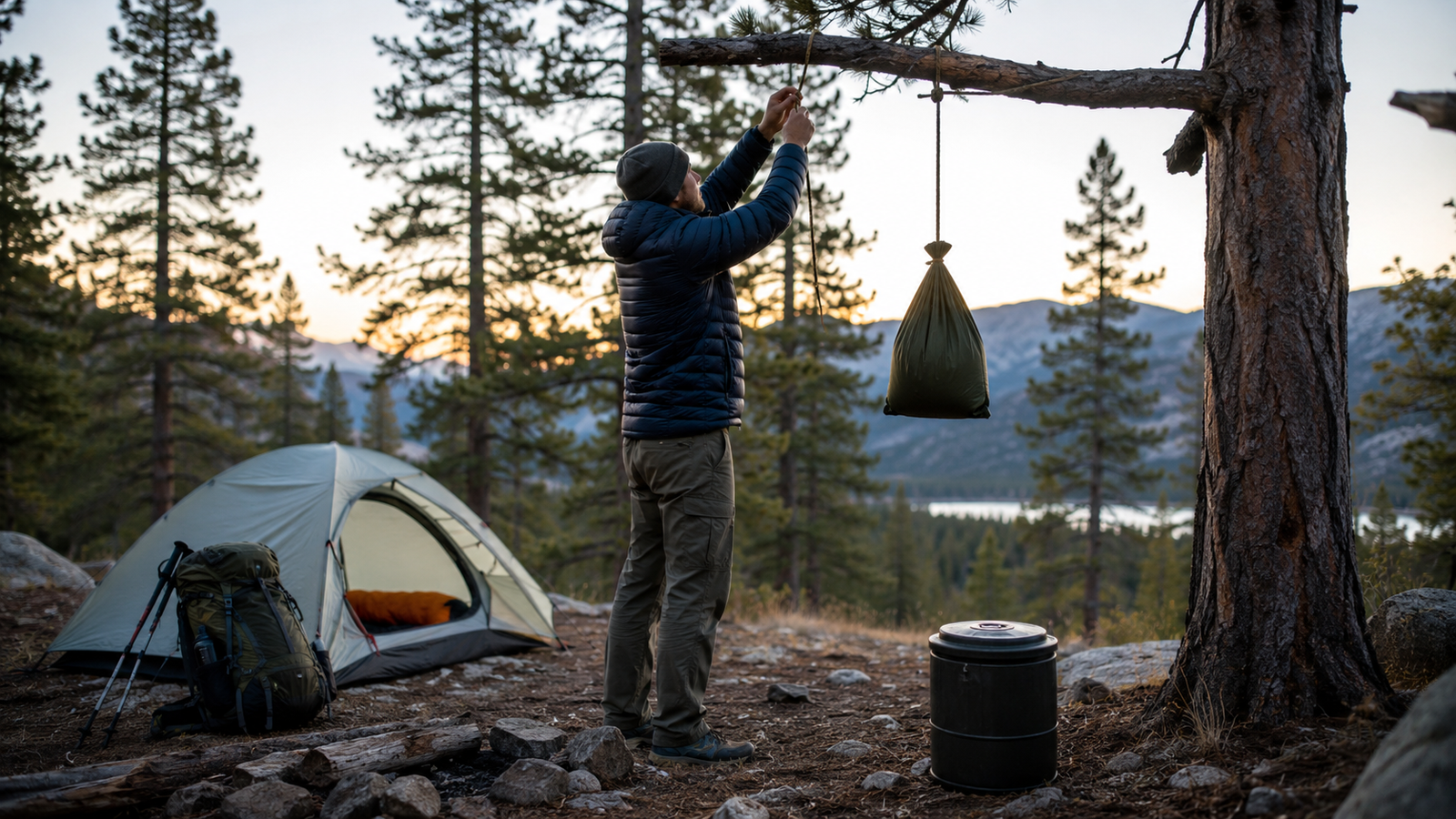
Food-storage rules vary between destinations. Some locations require lockers, approved bear-resistant canisters, food cables, or storage inside a hard-sided vehicle. Local regulations always take priority.
Step 8: Keep the Backup Plan Ready
Know exactly what you will do if the weather changes.
You should be able to deploy your tent, tarp, or bivy quickly, including in darkness and wind.
Is Cowboy Camping Safe for Beginners?
Cowboy camping can be safe for beginners when the trip is deliberately simple.
A good first experience might involve:
- Testing the setup in a backyard.
- Trying it at an established campground.
- Choosing a dry night with mild temperatures.
- Staying close to a vehicle or shelter.
- Carrying a tent or tarp.
- Using a bug net when insects are active.
- Camping with an experienced partner.
- Avoiding bear country until food-storage skills are established.
Do not make your first attempt during a remote solo backpacking trip, an unstable mountain forecast, extreme heat, freezing conditions, or an area with complicated wildlife requirements.
Common Cowboy Camping Mistakes
Leaving the Shelter at Home
A favorable forecast reduces risk but does not eliminate it.
Sleeping in a Drainage Area
Dry streambeds and washes can become dangerous when storms occur upstream, even when no rain is falling directly over camp.
Ignoring Dew
Clear nights can still leave exposed insulation wet by morning.
Choosing a Campsite After Dark
Poor visibility makes it harder to identify animal signs, dead branches, fragile surfaces, drainage channels, and nearby hazards.
Keeping Food Beside the Sleeping Bag
Food, trash, toothpaste, and scented products can attract wildlife. Follow local storage requirements every time.
Underestimating Temperature
Open exposure, wind, and cold ground can make a night feel colder than expected.
Refusing to Change the Plan
Cowboy camping is optional. Pitching the shelter is the correct decision when conditions become uncertain.
Frequently Asked Questions
What is cowboy camping?
Cowboy camping is sleeping outdoors without setting up a tent or another full overhead shelter. Most campers still use a groundsheet, insulated sleeping pad, sleeping bag, and backup shelter.
Is cowboy camping safe?
It can be safe in legal camping areas when the weather is stable, temperatures are appropriate, wildlife rules are followed, and emergency shelter is available. It is unsuitable during thunderstorms, extreme temperatures, heavy insect activity, or uncertain conditions.
What do you sleep on when cowboy camping?
Most people sleep on a groundsheet and insulated sleeping pad with a sleeping bag or quilt. The groundsheet protects equipment, while the pad provides comfort and reduces heat loss into the ground.
What happens if it rains?
You should immediately move into the backup shelter you carried. A waterproof tarp, tent, or appropriate bivy must be accessible and familiar enough to deploy quickly.
Do you need a bivy sack for cowboy camping?
No. A bivy is optional. It can provide protection against dew, light wind, insects, and minor weather conditions, depending on its construction.
Can beginners try cowboy camping?
Yes. Beginners should start in a backyard or established campground during mild, dry weather and remain close to a vehicle or other safe shelter.
Is cowboy camping legal everywhere?
No. Overnight rules vary by park, forest, wilderness area, campground, and other public or private land. Some locations require permits or restrict camping to designated sites.
How do you deal with bugs?
Use an EPA-registered insect repellent, wear protective clothing, inspect the campsite, and use a head net or bug bivy when necessary. Heavy mosquito or tick activity may make a fully enclosed tent the better option.
Should you carry a tent while cowboy camping?
Backcountry campers should normally carry a tent, tarp, or another reliable emergency shelter. Cowboy camping is a sleeping choice for suitable conditions, not a reason to ignore changing weather.
What is the best weather for cowboy camping?
The best conditions are dry, mild, calm, and stable, with low precipitation and thunderstorm risk. Always review the hourly forecast and prepare for temperatures colder than the evening conditions suggest.
Final Thoughts
Cowboy camping is one of the simplest ways to spend a night outdoors.
You need only a suitable site, groundsheet, sleeping pad, appropriate insulation, and a clear view of the sky. The reward is a fast setup and a direct connection with the landscape that even a lightweight tent cannot fully reproduce.
However, simplicity should never replace preparation.
A responsible cowboy camper still:
- Carries emergency shelter
- Checks the hourly forecast
- Follows permit and campsite rules
- Stores food correctly
- Protects fragile surfaces
- Prepares for insects and dew
- Avoids wildlife activity
- Changes plans when conditions become uncertain
Start with one mild night near your vehicle or at an established campground. Once you understand how your sleep system performs without a tent, you can decide whether cowboy camping belongs in your future backpacking trips.
Editorial Research Note
Xplore Terrainz reviewed current outdoor safety, campsite selection, wildlife, insect-prevention, and weather guidance from the National Park Service, National Weather Service, Centers for Disease Control and Prevention, U.S. Forest Service, and Leave No Trace. Regulations and conditions vary by destination, so confirm local permits, closures, food-storage rules, and weather before every overnight trip.