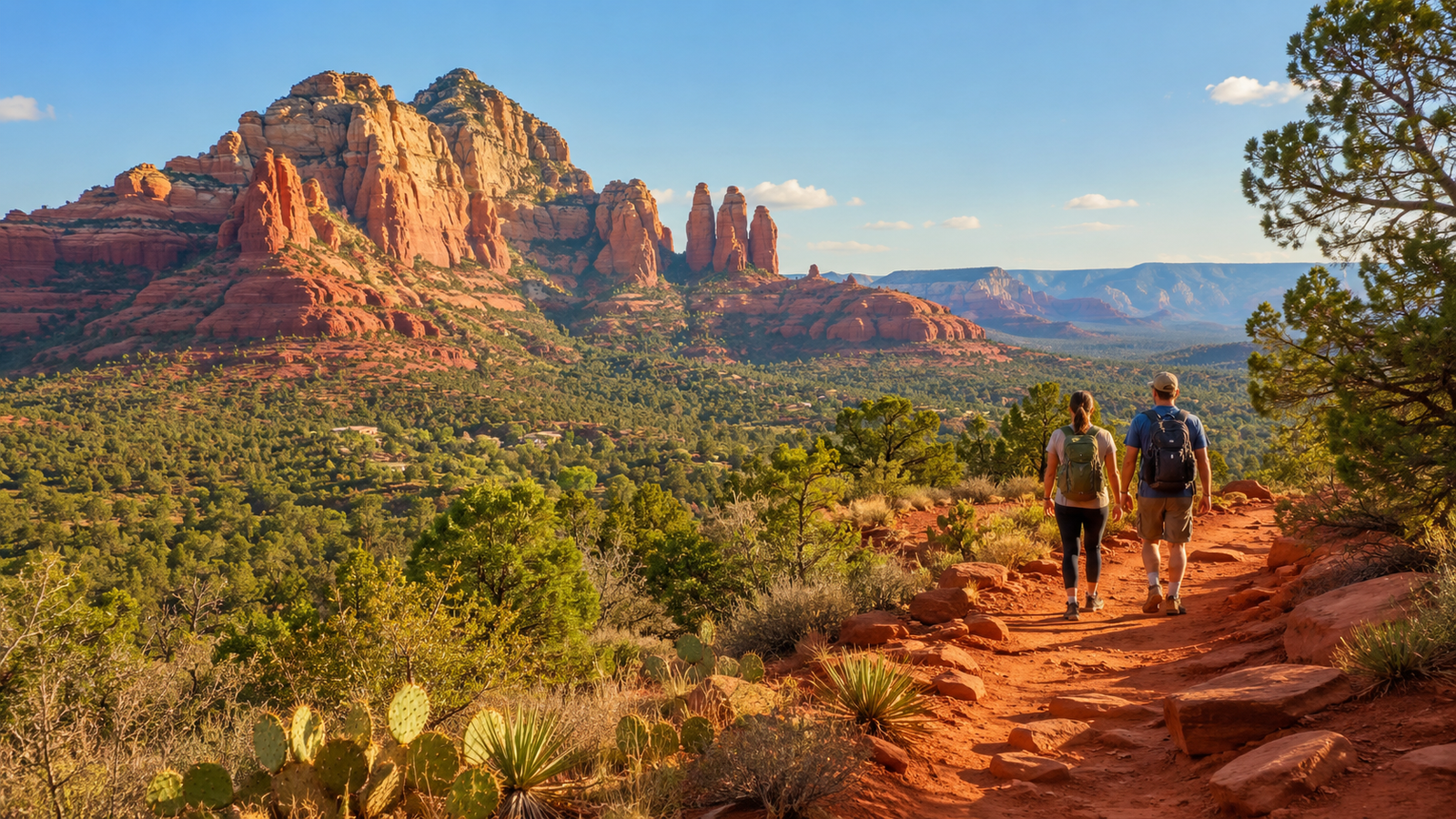
The best time to visit Sedona is usually April or October if your priorities are comfortable hiking weather, clear red-rock views and access to a wide range of outdoor activities.
Both months typically bring mild daytime temperatures, but they are also part of Sedona’s busiest travel seasons. Visitors who prefer quieter trails may have a better experience in January, February, late November or early December.
Summer can offer lower demand, but high temperatures and monsoon thunderstorms make outdoor planning more difficult. Winter is peaceful and often beautiful, although cold mornings, occasional snow and icy shaded trails may affect hiking plans.
When choosing the best time to visit Sedona, AZ, consider more than just the average temperature. Crowds, accommodation demand, daylight, trail exposure, seasonal storms and the activities you want to experience can all influence your trip.
This guide explains Sedona weather by month, the best hiking seasons, quieter travel periods and what to do in Sedona, Arizona, throughout the year.
Sedona Best Time to Visit: Quick Answer
| Best overall experience | April and October |
| Best hiking weather | March–April and October–November |
| Fewer crowds | January, February, late November and early December |
| Warm weather without peak summer heat | May and late September |
| Fall scenery | Late October and early November |
| Winter photography | December through February |
| Creek activities | Late spring through summer |
| Lower seasonal demand | Winter weekdays and summer |
| Avoiding extreme heat | October through May |
| Avoiding peak monsoon risk | October through early summer |
For most first-time travelers, April offers the best spring balance, while October is usually the strongest fall choice. Arizona State Parks describes spring and fall as Sedona’s busiest periods, with daytime highs commonly reaching the mid-to-upper 70s and much cooler nighttime conditions.
Where Is Sedona?
Sedona is in northern Arizona, within the red-rock landscape of the Upper Sonoran Desert. The city sits at an elevation of roughly 4,500 feet and straddles the boundary between Coconino and Yavapai counties within Coconino National Forest.
It is approximately 114 miles north of Phoenix and about 110 miles south of the Grand Canyon. The drive from Phoenix typically takes about 2 hours, while Flagstaff’s regional airport is approximately 45 minutes away.
Sedona is not a national park, but it works well as a base for exploring national forests, state parks, Oak Creek Canyon, heritage sites and other destinations across northern Arizona.
Travelers building a larger outdoor itinerary can also explore our guide to the 15 Best National Parks in the USA for First-Time Visitors.
What Is the Best Time to Go to Sedona, AZ?
For the most comfortable combination of hiking, sightseeing and outdoor dining, plan your visit during:
- April
- October
- Early November
- Late March, when conditions are dry
- Late September, if the summer heat has started easing
April generally offers longer daylight and spring scenery, while October brings cooler hiking conditions and pleasant evenings.
The disadvantage is popularity. Trailheads, restaurants, accommodation and scenic roads may become crowded during spring and fall, particularly on weekends.
For a quieter Sedona vacation, consider:
- January, after the holiday period
- Early February outside major event dates
- Late November, after Thanksgiving
- Early December
- Summer weekdays, provided you can manage heat and storms.
No single month is perfect for every traveler. The right choice depends on how much heat, cold, rain and crowding you are willing to accept.
Sedona Weather by Month
The following figures are long-term averages for the Sedona area. Actual temperatures, precipitation, snow and storm activity vary each year.
| January | 56°F | 30°F | 2.10 inches |
| February | 61°F | 33°F | 2.16 inches |
| March | 65°F | 37°F | 2.47 inches |
| April | 73°F | 42°F | 1.16 inches |
| May | 82°F | 49°F | 0.71 inches |
| June | 93°F | 58°F | 0.36 inches |
| July | 97°F | 64°F | 1.65 inches |
| August | 94°F | 63°F | 1.90 inches |
| September | 88°F | 58°F | 1.94 inches |
| October | 77°F | 48°F | 1.67 inches |
| November | 64°F | 36°F | 1.38 inches |
| December | 57°F | 31°F | 1.51 inches |
Spring and fall usually provide the easiest conditions for long outdoor days. Summer is hot and increasingly stormy during monsoon season, while winter brings comfortable afternoons but cold mornings and nights.
Is Spring or Fall Better in Sedona?
Both seasons are excellent, but they suit different travel styles.
Visit Sedona in spring for:
- Longer daylight hours
- Green vegetation near Oak Creek
- Seasonal wildflowers
- Mild afternoon temperatures
- Outdoor dining
- Comfortable sightseeing
- Creek activities later in the season
Arizona’s main wildflower period generally runs from March through May, although the quality and timing of blooms depend heavily on winter rain and temperature patterns.
Visit Sedona in the fall for:
- Cooler hiking temperatures
- Comfortable scenic drives
- Lower overnight temperatures
- Autumn scenery around Oak Creek Canyon
- Golden-hour photography
- Less summer storm risk
- Longer exposed hikes
October is often slightly better for serious hikers, while April may be more appealing to families and travelers who prefer longer daylight.
Sedona Month-by-Month Guide
Visiting Sedona in January
January is one of Sedona’s quieter travel periods.
Average daytime highs reach around 56°F, while nighttime temperatures average near 30°F. Snow does not remain on the ground throughout winter, but occasional storms can cover the red rocks and create striking photography conditions.
January is suitable for:
- Quiet scenic trips
- Cool-weather hiking
- Photography
- Galleries and restaurants
- Spa and wellness experiences
- Travelers with flexible schedules
Hikers should pack warm layers and check shaded trails for ice. A sunny road or parking lot may be clear while north-facing trail sections remain slippery.
Visiting Sedona in February
February is slightly warmer than January, with average highs around 61°F.
It remains a good month for hiking without spring-level crowds, although cold mornings, rain, snow and icy trail sections are still possible.
February works well for:
- Moderate daytime hikes
- Art and cultural activities
- Photography
- Quiet weekday trips
- Wellness-focused stays
Check the local events calendar before reserving accommodation because winter festivals and special events may temporarily increase demand.
Visiting Sedona in March
March marks the beginning of the spring travel season.
Average highs reach approximately 65°F, while mornings remain cold. March also has the highest average monthly precipitation in the Arizona State Parks weather table, so travelers should prepare for changing conditions.
March is suitable for:
- Longer hikes in cool weather
- Mountain biking
- Scenic drives
- Spring photography
- Active sightseeing
Spring-break travel can increase congestion. Pack layers, rain protection and enough clothing for large temperature differences between morning and afternoon.
Visiting Sedona in April
April is one of the best months to visit Sedona.
Average temperatures range from approximately 42°F in the morning to 73°F during the afternoon. These conditions are comfortable for easy walks, challenging hikes and scenic sightseeing.
April offers:
- Mild hiking temperatures
- Longer daylight
- Spring vegetation
- Pleasant evenings
- Outdoor dining
- Good conditions for first-time visitors
The main disadvantage is demand. Begin popular hikes early and reserve accommodation once your dates are confirmed.
Visiting Sedona in May
May is warmer, drier and well-suited to early-morning outdoor activities.
Average highs reach approximately 82°F, while nighttime lows average around 49°F.
May is good for:
- Sunrise hikes
- Oak Creek activities
- Scenic drives
- Longer daylight
- Warm evenings
- Outdoor dining
Exposed red-rock trails can feel hotter than the official air temperature suggests because shade is limited. Begin strenuous routes early and carry adequate water.
Visiting Sedona in June
June is Sedona’s driest month on average, but daytime heat becomes a major consideration.
Average highs reach approximately 93°F.
June may appeal to visitors who want:
- Clear early mornings
- Sunrise photography
- Lower demand than spring
- Creekside activities
- Potential accommodation savings
It is not ideal for long exposed hikes during the middle of the day. Dry conditions can also increase wildfire danger, so check official forest alerts and fire restrictions before heading to trailheads or recreation areas.
Visiting Sedona in July
July is usually the hottest month, with an average high near 97°F.
It also falls within northern Arizona’s active monsoon period. Thunderstorms can bring lightning, strong winds, heavy rain and flash flooding, sometimes far from where the heaviest rain is falling. The National Weather Service advises particular caution from July through mid-
September because severe storms and flash floods can develop rapidly.
July visitors should:
- Begin hikes around sunrise.
- Avoid long exposed routes.
- Monitor hourly forecasts
- Stay away from washes during storm risk.
- Leave ridges when thunder develops.
- Carry extra water
- Prepare indoor afternoon activities.
Never enter floodwater or assume a familiar crossing will remain safe.
Visiting Sedona in August
August remains hot, with average highs around 94°F, and monsoon thunderstorms continue to affect outdoor planning.
The month is better suited to:
- Short early-morning hikes
- Shaded trails
- Scenic drives
- Galleries
- Spa visits
- Creek activities when conditions are safe
Storms can make smooth red-rock surfaces slippery and cause rapid runoff through canyons and washes. Keep plans flexible and turn around when clouds begin building.
Visiting Sedona in September
September is a transition between summer and fall.
Average highs remain close to 88°F, but conditions usually become more comfortable later in the month. Monsoon weather may still affect early September.
Late September can offer:
- Warmer fall hiking
- Comfortable evenings
- Good sunrise and sunset conditions
- Fewer summer temperature extremes
- Increasing outdoor activity options
Visitors who dislike heat should choose the final part of the month rather than early September.
Visiting Sedona in October
October is arguably the best time to visit Sedona for hiking.
Average highs reach approximately 77°F, with nighttime temperatures around 48°F.
October offers:
- Comfortable hiking temperatures
- Lower heat risk
- Scenic drives
- Outdoor dining
- Seasonal events
- Fall scenery
- Excellent photography conditions
The main drawback is crowding. October is part of Sedona’s peak fall season, so weekday travel and early trail starts are strongly recommended.
Visiting Sedona in November
November is one of the strongest alternatives to October.
Average highs fall to approximately 64°F, while nighttime temperatures approach the mid-30s.
November works well for:
- Longer cool-weather hikes
- Scenic photography
- Reduced heat exposure
- Oak Creek Canyon drives.
- Quieter travel after peak fall dates
Daylight is shorter, and early mornings can be cold. Thanksgiving week may be busier than the surrounding dates.
Visiting Sedona in December
December is cool, peaceful and appealing for travelers who do not mind short days.
Average highs are around 57°F, and lows are near freezing.
December is suitable for:
- Winter hiking
- Scenic road trips
- Photography
- Restaurants and galleries
- Wellness travel
- Holiday activities
Early December is usually calmer than the Christmas and New Year period. Bring warm layers and allow additional time for icy or shaded trails.
What to Do in Sedona, Arizona by Season
Travelers comparing things to do in Sedona, Arizona, should build their itinerary around seasonal conditions. A plan that works in April may be uncomfortable or unsafe in July.
What to Do in Sedona During Spring
Spring is an excellent time for:
- Hiking Cathedral Rock
- Exploring Bell Rock
- Walking around Airport Mesa
- Mountain biking
- Scenic driving
- Wildflower photography
- Visiting galleries
- Outdoor dining
- Exploring Oak Creek
Spring’s mild temperatures make it easier to combine several activities in one day, but popular trailheads may become crowded by midmorning.
What to Do in Sedona During Summer
During summer, prioritize:
- Sunrise hikes
- Short shaded routes
- Oak Creek activities
- Scenic drives
- Art galleries
- Restaurants
- Spa and wellness experiences
- Sunset viewpoints after temperatures fall
Keep afternoon plans flexible because of the heat and monsoon thunderstorms. Do not plan a long exposed hike as the central activity of a July or August afternoon.
What to Do in Sedona During Fall
Fall is well suited to:
- Long hikes
- Mountain biking
- Scenic drives through Oak Creek Canyon
- Photography
- Arts and community events
- Outdoor dining
- Verde Valley day trips
- Sunrise and sunset viewpoints
October is busy, while November generally offers cooler conditions and somewhat lower demand.
What to Do in Sedona During Winter
Winter activities include:
- Midday hiking
- Snow-dusted red-rock photography
- Scenic drives
- Stargazing
- Galleries
- Restaurants
- Wellness retreats
- Quiet weekday stays
Sedona is recognized as an International Dark Sky Community, making stargazing an appealing activity on clear nights year-round.
Best Time to Visit Sedona for Hiking
Best months for long hikes
Choose:
- March
- April
- October
- November
These months generally provide the strongest balance of moderate temperatures and manageable mornings.
Exposed routes become more difficult as daytime temperatures rise. Always check the trail’s distance, elevation gain, shade and turnaround options before leaving.
Best months for shorter hikes
Easy and moderate trails can be enjoyed throughout much of the year.
Winter afternoons may be comfortable, while summer hikes should begin near sunrise and finish before temperatures and storm risk increase.
Best season for Oak Creek Canyon
Oak Creek Canyon can be appealing throughout the year:
- Spring brings greenery
- Summer offers shaded areas and creek recreation.
- Fall attracts visitors for seasonal foliage.
- Winter provides quieter scenic drives.
Road traffic, parking, water levels, weather and temporary closures may affect access.
Most difficult hiking season
July and August are generally the most challenging months for exposed hiking because of extreme heat and monsoon hazards.
June can also be dangerously hot, even though rainfall is lower.
Summer hiking plans should focus on:
- Sunrise departures
- Short routes
- Shaded terrain
- Easy turnaround points
- More water
- Frequent forecast checks
- Indoor afternoon alternatives
When Is Sedona Least Crowded?
Sedona is typically quieter during:
- January
- Early February
- Late November
- Early December
- Hot summer weekdays
This is partly an inference from the destination’s heavier spring and fall demand and the less comfortable weather of winter and summer.
Even during peak season, you can reduce crowd exposure by:
- Visiting Sunday through Thursday
- Hiking near sunrise
- Avoiding holiday weekends
- Using the trailhead shuttle
- Choosing less famous legal trials
- Eating outside standard meal times
- Spending several days instead of rushing through town
Never create an unofficial parking space, block roads or drive onto vegetation because a trailhead lot is full.
Sedona Crowds, Parking, and Shuttle Tips
Parking can be difficult at popular trailheads during spring and fall.
The Sedona Shuttle provides free transportation from park-and-ride areas to selected trailheads. Its regular trailhead services currently operate year-round on scheduled days without reservations, but routes and temporary service interruptions are subject to change. Check the official schedule shortly before your visit.
Before leaving for a hike:
- Check whether the shuttle service is available.
- Confirm the current operating day.
- Review temporary route changes.
- Arrive at the park-and-ride area early.
- Keep an alternative trail ready.
- Verify whether the recreation site requires a parking pass.
Some Coconino National Forest recreation sites require a Red Rock Pass or another accepted recreation pass, while separately managed sites may charge their own fees.
Best Time to Visit Sedona for Lower Prices
Accommodation prices vary according to season, weekend demand, holidays and local events.
The highest demand commonly occurs during:
- March through May
- October
- Holiday weekends
- Major event dates
Potentially better-value periods include:
- January after the New Year
- Early February outside event dates
- June through August
- Late November outside Thanksgiving
- Early December
This is not a guarantee that every property will be cheaper. Compare several dates and consider the value of better weather.
A lower summer room rate may not provide good overall value when heat prevents you from completing the activities that brought you to Sedona.
How to Plan a Sedona Vacation
A well-balanced Sedona vacation should include outdoor activities, scenic sightseeing and flexible time for weather or parking delays.
Two-day Sedona itinerary
Day 1
- Complete a short sunrise hike.
- Explore Bell Rock or Airport Mesa
- Visit Uptown Sedona
- Enjoy a scenic sunset viewpoint.
Day 2
- Start a longer hike early.
- Use the shuttle where available.
- Drive through Oak Creek Canyon
- Visit galleries or restaurants in the evening.
Three-day Sedona itinerary
Three days is ideal for many first-time visitors.
Day 1: Red-rock introduction
- Short scenic trail
- Bell Rock area
- Uptown Sedona
- Sunset viewpoint
Day 2: Main hiking day
- Early start
- One longer hike
- Afternoon rest
- Gallery, restaurant or wellness activity
Day 3: Oak Creek and Verde Valley
- Scenic canyon drive
- Creekside activity
- Shorter trail
- Nearby cultural or heritage site
Four or five days
A longer stay creates flexibility for:
- Multiple hiking areas
- Mountain biking
- Oak Creek Canyon
- Weather delays
- Verde Valley day trips
- Galleries and wellness activities
- A Grand Canyon day trip
The official Sedona tourism bureau lists the Grand Canyon, national monuments and several heritage destinations among the possible trips from Sedona.
What to Pack for Sedona by Season
Spring packing list
Bring:
- Light hiking layers
- Warm morning layer
- Rain jacket
- Sun hat
- Sunscreen
- Supportive footwear
- Adequate water
- Wind protection
March can produce large temperature changes and unsettled weather.
Summer packing list
Bring:
- Lightweight sun-protective clothing
- Wide-brimmed hat
- Sunscreen
- More water than usual
- Electrolytes
- Rain shell
- Offline maps
- Headlamp for early starts
Do not rely on one small bottle of water for an exposed summer hike.
Fall packing list
Bring:
- Light daytime clothing
- Fleece or insulated evening layer
- Wind-resistant shell
- Sun protection
- Hiking shoes
- Headlamp
- Adequate water
October afternoons may feel warm, while November mornings can become cold.
Winter packing list
Bring:
- Insulated jacket
- Base layers
- Gloves
- Warm hat
- Rain or snow shell
- Suitable traction when needed
- Extra socks
- Headlamp
- Emergency warmth layer
Always check the current forecast and trail conditions before setting out.
Frequently Asked Questions
What is the best month to visit Sedona?
April and October are the best months for most visitors because they generally provide comfortable hiking temperatures and access to outdoor activities. Both months are busy, so weekday visits are preferable.
What month has the best weather in Sedona?
April usually offers mild spring conditions, while October provides comfortable fall temperatures. Average highs are approximately 73°F in April and 77°F in October.
When is Sedona least crowded?
January, early February, late November and early December are generally quieter than peak spring and fall. Hot summer weekdays may also have lower demand.
Where is Sedona located?
Sedona is in northern Arizona, approximately 114 miles north of Phoenix. It sits within Coconino National Forest and straddles Coconino and Yavapai counties.
What are the best things to do in Sedona, Arizona?
Popular activities include hiking, mountain biking, scenic drives, exploring Oak Creek Canyon, visiting art galleries, stargazing, watching sunrise or sunset and taking day trips through the Verde Valley.
Is summer too hot for hiking in Sedona?
Summer is often too hot for long, exposed hikes during the middle of the day. Short hikes may still be possible near sunrise, provided visitors carry enough water and monitor heat and thunderstorm conditions.
Is Sedona crowded in October?
Yes. October combines comfortable hiking weather, seasonal scenery and local events, making it one of Sedona’s busiest months.
Is Sedona worth visiting in winter?
Yes. Winter offers fewer crowds, cool daytime hiking, clear photography conditions and occasional snow on the red rocks. Visitors must prepare for cold mornings, shorter daylight and possible ice.
When is the monsoon season in Sedona?
Northern Arizona’s monsoon pattern mainly affects summer, with particular flash-flood concern from July through mid-September. Storm activity and timing vary each year.
Does it snow in Sedona?
Sedona can receive snow during winter. Snow may melt relatively quickly on sunny, exposed ground, while shaded trails can retain ice longer.
How many days are enough for a Sedona vacation?
Three days are enough for most first-time visitors. This provides time for one major hike, easier outdoor activities, a scenic drive and some flexibility for traffic or changing weather.
What is the cheapest time to visit Sedona?
Winter weekdays outside holidays and major event dates may offer better value. Summer can also have lower demand, but high temperatures may limit daytime hiking.
Final Thoughts
The best time to visit Sedona depends on what you want from the trip.
Choose:
- April for mild spring weather and longer daylight
- October is an excellent time for fall hiking
- November for cooler trails and somewhat lower demand
- January or early December for a quieter experience
- Summer only when you can start early and adapt to heat and thunderstorms
Spring and fall provide the easiest outdoor conditions but attract the largest crowds. Winter offers peaceful trails and cooler temperatures, but shorter days. Summer may bring lower accommodation demand, yet heat and monsoon weather require more careful planning.
The best season is not simply the one with the most attractive average temperature. It is the one that supports the hikes, scenic drives and experiences you genuinely want to include in your Sedona trip.