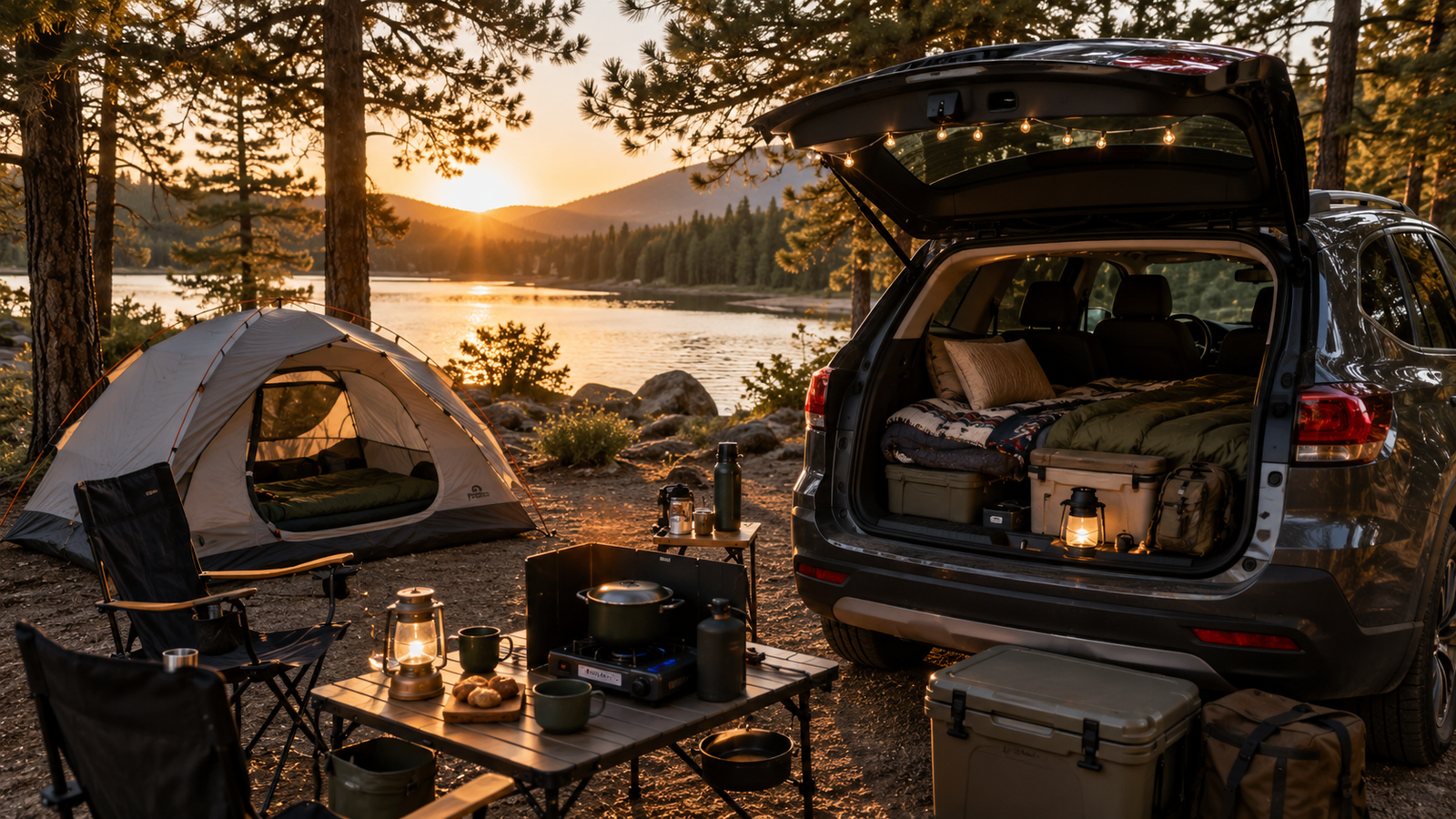
The best car camping gear should solve the problems that matter most at camp: comfortable sleep, weather protection, simple cooking, safe food storage, reliable lighting, enough water, and an organized vehicle.
For most weekend trips, prioritize a spacious tent, a thick sleeping pad, a temperature-appropriate sleeping bag, a two-burner stove, a dependable cooler, a refillable water container, a lantern, a camp chair, and basic emergency equipment. A camp table and portable power station can improve comfort, but they are optional rather than essential.
You do not need to buy everything at once. Start with sleep, shelter, water, food, and safety, then add convenience items once you learn how you prefer to camp.
Best Car Camping Gear at a Glance
| Gear category | Research-based pick | Best for |
|---|---|---|
| Camping tent | REI Co-op Base Camp 4 | Couples and small groups wanting space |
| Camping mattress | EXPED MegaMat Duo 10 | Maximum sleeping comfort |
| Sleeping bag | REI Co-op Siesta Hooded 20 | Cool-weather car camping |
| Camping stove | Coleman Cascade 3-in-1 | Flexible campsite cooking |
| Cooler | RTIC 52 QT Ultra-Light | Weekend food and drinks |
| Camp table | REI Co-op Camp Prep Table | Cooking and meal preparation |
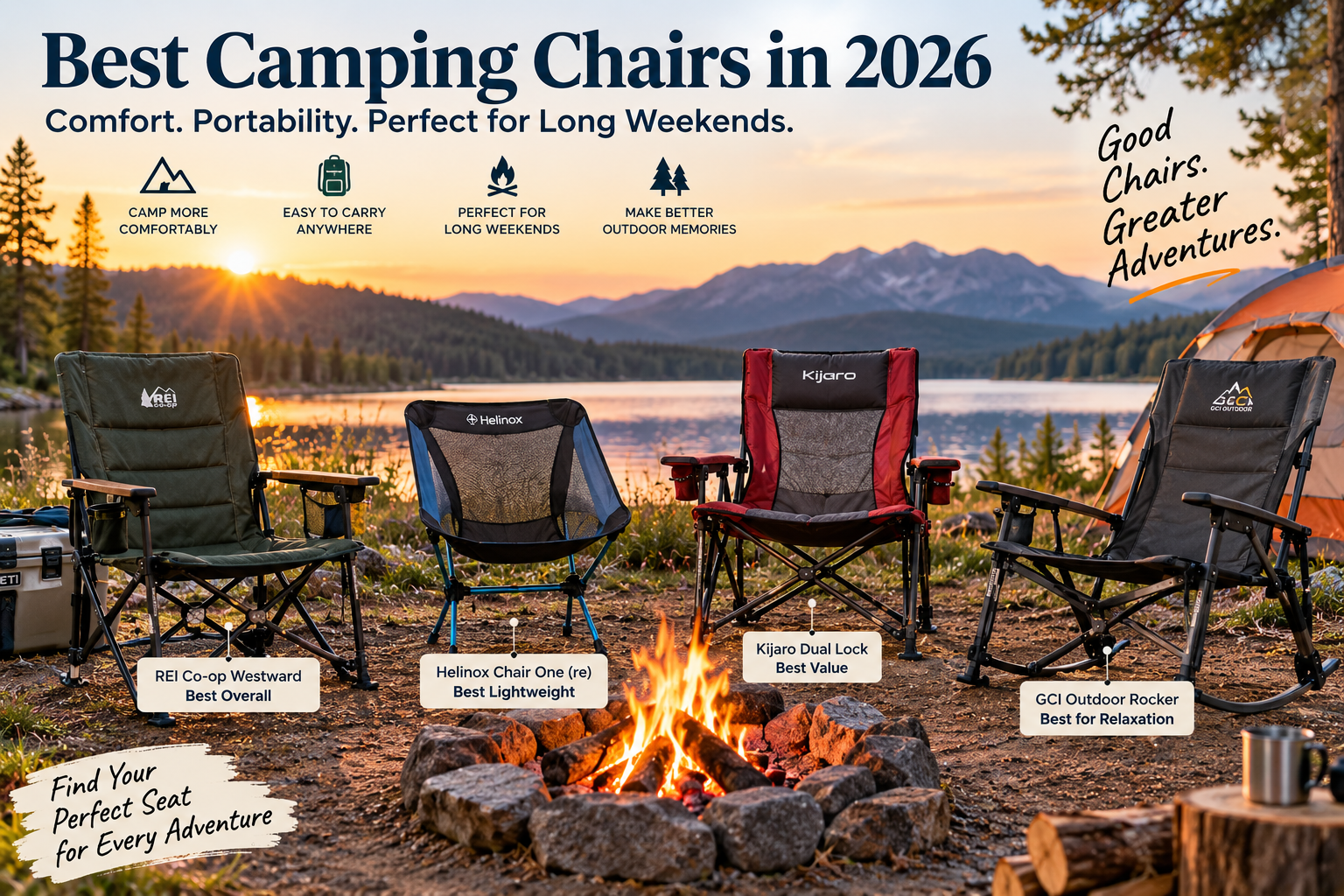
| Camp chair | GCI Outdoor Freestyle Rocker | Relaxing around camp |
| Lantern | BioLite AlpenGlow 500 | Campsite and table lighting |
| Portable power | EcoFlow RIVER 2 Pro | Devices and small electronics |
| Water storage | Refillable 5-gallon container | Drinking, cooking, and cleanup |
| Organization | Lidded storage bins | Faster packing and cleaner camps |
| Emergency gear | First-aid kit and vehicle kit | Basic trip safety |
Our Recommendation Method
This is a research-based car camping gear guide. Xplore Terrainz has not claimed to have personally field-tested every item listed.
Products were selected by comparing:
- Current manufacturer specifications
- Intended use
- Sleeping comfort
- Setup requirements
- Packed weight and size
- Capacity
- Weather suitability
- Ease of cleaning
- Safety considerations
- Usefulness on an ordinary weekend trip
- Suitability for beginners and recreational campers
Prices, colors, stock, materials, and specifications are subject to change. Confirm the latest details with the manufacturer before purchasing.
What Gear Do You Actually Need for Car Camping?
A basic car camping setup requires six systems:
- Shelter: A tent or a safe sleeping arrangement inside your vehicle
- Sleep: Mattress or pad, sleeping bag, pillow, and suitable clothing
- Water: Drinking water plus water for cooking and cleaning
- Food: Cooler, stove, fuel, cookware, and legal food storage
- Light: Headlamp for each person and at least one campsite lantern
- Safety: First-aid supplies, weather protection, navigation, and vehicle equipment
Optional comfort items include chairs, a separate table, a campsite rug, a shade shelter, a power station, and decorative lighting.
Before building a specialized car camping setup, review our camping essentials checklist to ensure you have clothing, navigation, hygiene, emergency supplies, and other items that apply to nearly every camping trip.
1. REI Co-op Base Camp 4
Best Car Camping Tent
Best for: Couples, small families, and campers who want more space
Sleeping capacity: Four people
Primary strengths: Weather-ready design, two doors, useful vestibules, and comfortable interior space
The REI Co-op Base Camp 4 is a practical shelter for campers who prioritize durability and usable space over minimum packed weight.
It provides 59 square feet of floor area, a 63-inch peak height, two doors, and two vestibules. The tent is designed for three-season camping and weighs approximately 17 pounds when packed, which is heavy for backpacking but reasonable to carry by car.
Why it works for car camping
- Room for a wide mattress or two separate pads
- Two doors reduce climbing over another person
- Vestibules provide space for footwear and equipment
- Aluminum poles
- Better weather-oriented structure than many basic cabin tents
- Suitable for weekend and multi-night camps
Limitations
A four-person tent does not necessarily sleep four adults comfortably once mattresses, clothing, and equipment are added. It is better viewed as a roomy two-person tent or a manageable shelter for two adults and one or two children.
Its packaged weight and pole structure also make it unnecessary for anyone who needs only a simple fair-weather shelter.
Verdict
Choose the Base Camp 4 when you need a dependable tent with enough interior room for comfortable car camping without moving to an oversized family shelter.
2. EXPED MegaMat Duo 10
Best Car Camping Mattress
Best for: Couples, side sleepers, and anyone who struggles to sleep on thin pads
Primary strengths: Four-inch thickness, strong insulation, and adjustable firmness
Sleep quality can determine whether car camping feels restorative or exhausting. A thick mattress is usually the most valuable comfort upgrade after a suitable shelter.
The EXPED MegaMat Duo is four inches thick and uses self-inflating foam supported by a top-up pump. Its current specifications list an R-value of 8.1, with several sizes ranging from a narrower two-person model to a queen-size option.
Why it stands out
- Thick enough to reduce pressure around hips and shoulders
- Firmness can be adjusted
- Strong insulation from the ground
- Multiple sizes
- Wide sleeping surface for couples
- Repair kit and inflation equipment included
Limitations
The MegaMat is bulky, heavy, and relatively expensive. It also requires enough vehicle space for storage and enough tent floor area when inflated.
Measure both your vehicle and tent before choosing a size. A mattress that technically fits may still block tent doors or leave no space for bags.
Verdict
Choose the MegaMat Duo when comfortable sleep is your main priority and packed size is less important because the vehicle carries your equipment.
3. REI Co-op Siesta Hooded 20 Sleeping Bag
Best Roomy Car Camping Sleeping Bag
Best for: Cool nights, campers who dislike restrictive mummy bags, and general three-season trips
Temperature rating: 20°F
Insulation: Synthetic
The REI Co-op Siesta Hooded 20 combines the roomier feel of a rectangular sleeping bag with a hood that helps retain warmth.
The current version is intended for cool-weather car camping, uses synthetic insulation, and comes in several length and width options. The medium version weighs approximately 5 pounds 7 ounces, while wider and longer models weigh more.
Why it stands out
- Rectangular shape allows more movement
- Hood improves warmth around the head
- Synthetic insulation
- Multiple sizes
- Interior storage pocket
- Suitable for campers unconcerned about backpacking weight
Limitations
A 20°F product rating does not guarantee that every sleeper will feel comfortable at 20°F. Personal metabolism, wind, humidity, clothing, mattress insulation, fatigue, and food intake all affect warmth.
The Siesta is also far too bulky for most backpacking trips.
Verdict
Choose the Siesta Hooded 20 when you want a traditional, roomy sleeping bag for cool car camping nights. Select your bag based on expected conditions rather than automatically choosing the warmest rating.
4. Coleman Cascade 3-in-1 Camping Stove
Best Versatile Car Camping Stove
Best for: Couples, families, and campers preparing more than basic one-pot meals
Primary strengths: Burner, grill, and griddle flexibility
The Coleman Cascade 3-in-1 provides a more flexible cooking surface than a basic single-burner stove.
It includes removable grill and griddle accessories, a recessed carry handle, a removable cast-iron pan support, and an aluminized-steel cooktop designed for easier cleanup.
What you can cook
- Eggs and pancakes on the griddle
- Vegetables or meat on the grill
- Pasta or soup in a pot
- Coffee or hot water
- One-pan breakfasts
- Simple campsite dinners
Why it works for car camping
- More meal options than a basic burner
- Portable folding design
- Separate cookware can still be used
- Removable components simplify cleaning
- Useful for families and longer weekends
Limitations
The cast-iron accessories add weight and require cleaning. A simpler and less expensive stove may better serve campers who only boil water or heat packaged meals.
Always test the stove before leaving, confirm that you have the correct fuel, and pack a lighter or matches even when the stove includes an igniter.
Critical stove safety
Never operate a fuel-burning camp stove inside a car, tent, camper, or other enclosed sleeping area. Carbon monoxide is colorless and odorless and can cause sudden illness or death. The CDC specifically advises against using portable gas camp stoves indoors.
5. RTIC 52 QT Ultra-Light Cooler
Best Weekend Car Camping Cooler
Best for: Two- to four-person weekend trips
Primary strengths: Useful capacity, hard-sided construction, and lower weight than comparable rotomolded coolers
A car camping cooler needs enough capacity for food, ice, drinks, and ingredients without becoming too heavy to move once loaded.
The RTIC 52 QT Ultra-Light uses an injection-molded design that the manufacturer states is more than 30% lighter than rotomolded coolers of similar capacity. It includes up to three inches of closed-cell foam insulation, a freezer-style gasket, rope handles, non-skid feet, and secure T-latches.
Why it stands out
- Practical capacity for a weekend
- Easier to move than many heavy-duty coolers
- Strong insulation
- Stable feet
- Secure latches
- Optional basket and divider
- Can provide an extra temporary surface at camp
Limitations
A 52-quart cooler becomes heavy when filled with food and ice. It may also occupy a significant portion of a small trunk.
A large cooler is not automatically better. Excess space makes organization harder, while an overfilled cooler can be difficult to open and carry.
Make ice last longer.
- Pre-chill the cooler when practical.
- Start with already-cold food and drinks.
- Keep frequently used beverages separate when space allows.
- Minimize how long the lid remains open.
- Keep the cooler shaded.
- Separate food that must stay dry.
- Drain or retain meltwater according to the manufacturer’s guidance and your food arrangement.
Food-storage warning
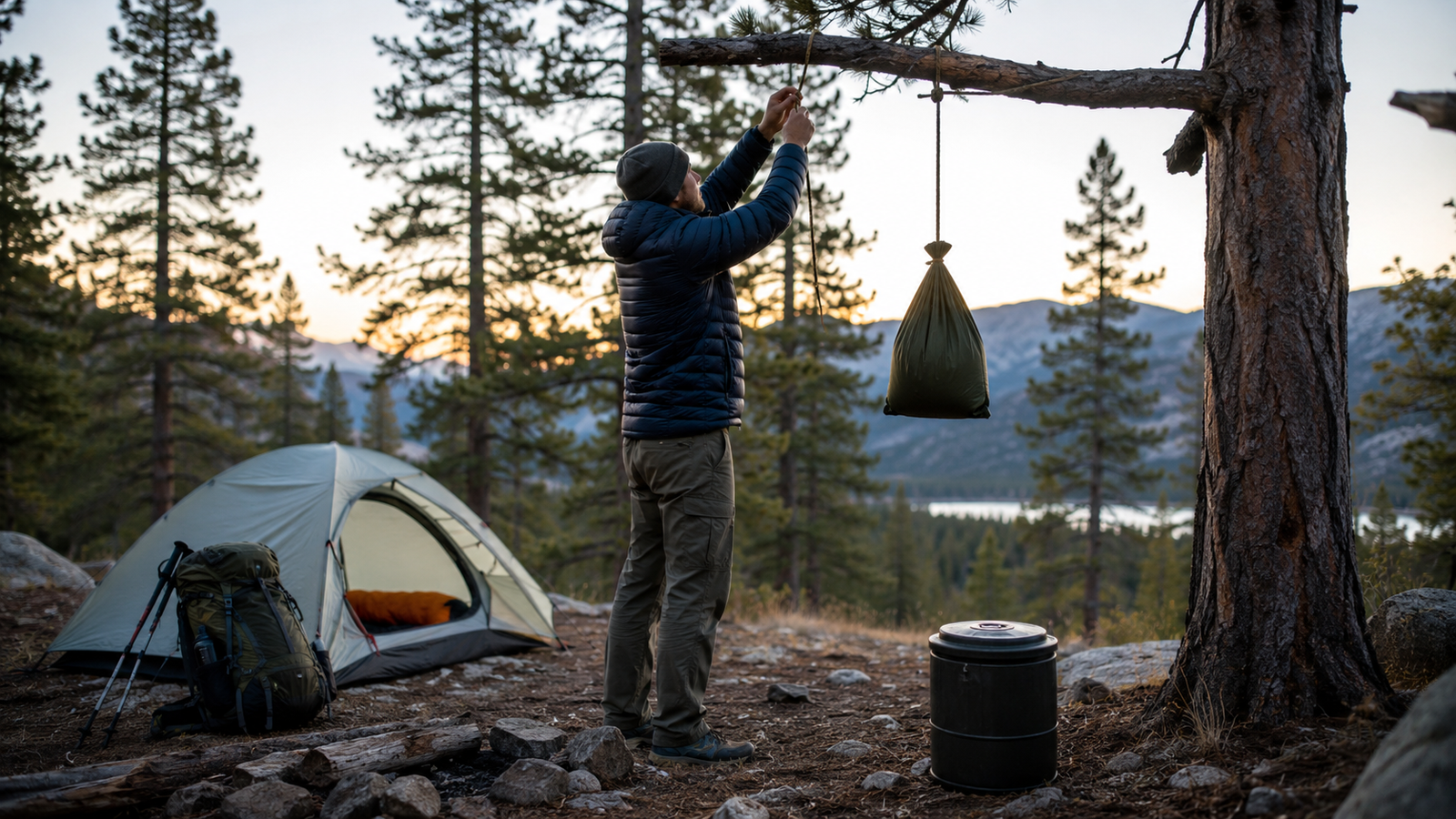
A cooler is not automatically approved as unattended wildlife storage. Rules vary by destination. Some parks require that coolers, food, toiletries, cookware, and other scented items be stored in a designated locker or a secured hard-sided vehicle. Always follow the exact campground’s rules rather than assuming the cooler itself is sufficient.
6. REI Co-op Camp Prep Table
Best Camp Kitchen Table
Best for: Campers whose site does not include a picnic table
Primary strengths: Large surface and adjustable height
A separate camp table keeps food preparation away from sleeping equipment and reduces the temptation to balance a stove on a cooler or unstable surface.
The REI Co-op Camp Prep Table measures approximately 49 by 24 inches. Its height adjusts between 22 and 31 inches, and it uses an aluminum top with a steel frame. The table weighs approximately 19 pounds 12 ounces.
Why it is useful
- Space for a stove and preparation area
- Adjustable working height
- Easier meal organization
- Creates separation between cooking and dining
- Aluminum surface is more practical near a stove than fabric
- Folds for vehicle transport
Limitations
It is heavy and takes meaningful cargo space. Many developed campgrounds already provide picnic tables, making a separate prep table unnecessary.
Please check the campsite amenities before packing.
Verdict
Choose a camp prep table for dispersed sites, group trips, or meal-focused weekends. Skip it when your reserved campsite already includes a suitable table.
7. GCI Outdoor Freestyle Rocker
Best Comfort-Focused Camp Chair
Best for: Developed campgrounds, sporting events, and relaxed weekends
Primary strengths: Rocking motion, fold-flat frame, and supportive armrests
The GCI Outdoor Freestyle Rocker uses spring-assisted rocking technology and folds flat for transport. It includes padded armrests, a mesh back panel, a cup holder, and a carry handle. The chair weighs approximately 11.8 pounds and has a listed capacity of 250 pounds.
Why it stands out
- More relaxing than a basic folding chair
- Easy opening and closing
- Breathable back panel
- Built-in drink holder
- Stable on various flat surfaces
- No separate carry bag required
Limitations
The folded frame is relatively wide and may be awkward in a small vehicle. It is also much heavier than compact backpacking chairs.
The rocking mechanism works best on reasonably level ground and should not be used close to a fire ring, drop-off, or unstable edge.
Verdict
Choose the Freestyle Rocker when campsite comfort matters and your vehicle has enough storage space. A simpler folding chair is a better choice for tight packing or short roadside stops.
8. BioLite AlpenGlow 500
Best Rechargeable Camping Lantern
Best for: Cooking, campsite organization, and adjustable evening lighting
Maximum brightness: 500 lumens
Battery: 6,400 mAh
Headlamps are essential for walking and hands-free tasks, but a lantern makes cooking, eating, and organizing camp more comfortable.
The BioLite AlpenGlow 500 provides up to 500 lumens, adjustable warm- and cool-white light, several color modes, a 6,400 mAh rechargeable battery, and USB-A output. BioLite lists approximately five hours of runtime on high and up to 200 hours on low, with IPX4 water resistance.
Why it stands out
- Bright enough for a table or shared camp area
- Adjustable warm and cool light
- Low-output settings preserve battery
- Rechargeable
- Can provide limited USB charging
- Water-resistant construction
- Lock mode helps prevent accidental activation in storage
Limitations
Decorative color modes are not necessary for safe camping, and a lower-cost white lantern may be enough for occasional use.
Its USB output should be treated as an emergency convenience, not a replacement for a dedicated power bank.
Verdict
Choose the AlpenGlow 500 when you want one lantern for practical work light and softer evening illumination.
9. EcoFlow RIVER 2 Pro
Best Portable Power Station for Longer Weekends
Best for: Cameras, laptops, lights, fans, and multiple rechargeable devices
Capacity: 768 Wh
AC output: 800 W
A portable power station is not essential for ordinary car camping. It becomes valuable when your trip includes photography equipment, work devices, rechargeable lights, medical equipment approved for portable-power use, or several people charging electronics.
The EcoFlow RIVER 2 Pro provides 768 Wh of capacity and an 800 W AC output. EcoFlow lists a weight of approximately 17.2 pounds and support for AC, car, and solar charging.
Why it stands out
- Large enough for several small devices
- Multiple output types
- Portable compared with larger home-backup units
- Car charging support
- Solar compatibility
- Useful during longer road trips
- Can reduce repeated use of the vehicle’s starter battery
Limitations
It is expensive, heavy, and unnecessary for campers who only charge phones and headlamps. A compact USB power bank is more economical for a one- or two-night trip.
A power station’s advertised capacity is not the same as the energy delivered to every device. Conversion losses, temperature, device demand, and battery condition reduce real-world output.
Verdict
Buy a power station only after listing the devices you genuinely need to run, their wattage, and how long they will be used.
10. A Refillable Water Container
Most Important Non-Branded Addition
A sturdy refillable water container is more useful than many expensive campsite accessories.
For most weekend setups, a container in the three- to five-gallon range provides water for:
- Drinking
- Coffee
- Cooking
- Basic dishwashing
- Handwashing
- Emergency reserve
A five-gallon container weighs more than 40 pounds when filled, so it should be placed low and secured against movement. Smaller containers are easier to lift and provide redundancy if one leaks.
Do not assume every campground provides drinkable water. Confirm the facilities before departure and carry enough for your group, weather, activities, pets, cooking, and an emergency delay.
Car Camping Gear You Can Keep Generic
Not every item needs a premium brand.
Storage bins
Use durable lidded bins for:
- Kitchen equipment
- Dry food
- Lighting and electronics
- Sleep equipment
- Hygiene supplies
- Vehicle tools
Transparent bins make items easier to find, while opaque bins keep valuables less visible.
Headlamps
Pack one headlamp per person rather than relying on phones. Keep spare batteries or confirm that each rechargeable lamp is fully charged before leaving.
First-aid kit
A basic kit should match the group size and trip length. Review its contents rather than assuming a sealed commercial kit includes everything you need.
Vehicle emergency equipment
Carry equipment appropriate to your vehicle and route, potentially including:
- Inflated spare tire
- Jack and lug wrench
- Tire-pressure gauge
- Jumper cables or jump starter
- Reflective warning triangles
- Flashlight
- Basic tool kit
- Recovery equipment appropriate to the road
- Printed emergency information
Recovery equipment is only useful when you understand how to use it safely.
What Is the Best Car for Car Camping?
There is no single best car for camping. The right vehicle depends on whether you sleep inside it, pitch a tent beside it, use paved campgrounds, or drive unpaved routes.
Useful vehicle features
Look for:
- Reliable mechanical condition
- Enough cargo space for essential equipment
- Rear seats that fold reasonably flat
- Interior length that matches the sleeper
- Multiple doors or a rear hatch
- Secure ventilation options
- Usable charging ports
- Appropriate ground clearance for intended roads
- Adequate payload capacity
- Roof-load compatibility only when roof equipment is planned
Vehicle types
Minivan
A minivan often provides the easiest interior sleeping space because of its long, relatively flat floor and wide doors.
SUV
An SUV balances cargo room, passenger space, and access to moderately rough roads. Interior sleeping length varies considerably.
Hatchback or wagon
A hatchback can work well for one person or a compact couple’s setup, particularly when the rear seats fold flat.
Pickup truck
A pickup provides substantial gear capacity. Sleeping comfortably usually requires a suitable canopy, bed platform, tent, or trailer.
Sedan
A sedan can still support tent-based car camping. It is less suitable for sleeping inside unless its dimensions and seat design allow a genuinely safe, comfortable position.
You do not need four-wheel drive for an ordinary developed campground. Do not choose routes based on vehicle marketing. Choose them based on road conditions, clearance, tires, weather, experience, and recovery options.
How to Sleep in Your Car Safely
Sleeping inside a vehicle can be practical, but it requires more planning than simply folding the seats.
Park only where overnight use is legal
A legal daytime parking space does not automatically permit overnight sleeping. Confirm current rules for the campground, public land, trailhead, rest area, or private property.
Create a flat sleeping platform.
A level surface protects sleep quality and prevents your body from sliding toward one side.
Possible solutions include:
- Folded rear seats
- Removable plywood platform
- Modular storage platform
- Firm foam to level seat gaps
- Vehicle-specific mattress
Test the complete setup at home before traveling.
Maintain ventilation
Slightly opened windows fitted with appropriate screens can reduce condensation. Ventilation must not compromise personal security or expose the interior to rain.
Never cook or heat the vehicle with a camp stove.e
Do not use propane stoves, charcoal, gas lanterns, or other combustion devices inside the vehicle. Carbon monoxide can accumulate without a visible or detectable warning.
Do not depend on an idling engine for warmth
Use a suitable sleeping bag, insulated mattress, dry clothing, and weather-appropriate layers. Keep the exhaust area clear, particularly in snow, mud, vegetation, or other conditions that could restrict airflow.
Keep an exit clear
Do not stack bins against every door. You should be able to unlock and exit the vehicle quickly in darkness.
Keep keys accessible
Store the keys in the same reachable location every night, but avoid placing them where accidental button presses can activate lights, alarms, or the hatch.
Keep food-storage rules in mind.
Some destinations permit properly secured food inside a locked hard-sided vehicle, while others require lockers or approved containers. Local rules take priority, especially in bear country.
How to Pack a Car for Camping
Use a zone system
Divide equipment into functional groups:
Sleep zone
- Tent
- Mattress
- Sleeping bags
- Pillows
- Sleep clothing
Kitchen zone
- Stove
- Fuel
- Cookware
- Utensils
- Water
- Cleaning supplies
Food zone
- Cooler
- Dry food bin
- Wildlife-compliant storage equipment
- Trash bags
Safety zone
- First-aid kit
- Headlamps
- Vehicle tools
- Emergency communication
- Weather protection
Day-use zone
- Hiking footwear
- Daypacks
- Maps
- Jackets
- Sunscreen
- Water bottles
Load heavy items low
Coolers, water, power stations, and dense bins should be placed low and secured. Heavy equipment can become dangerous during sudden braking.
Keep arrival equipment accessible.e
Pack the tent, rain protection, headlamps, and warm clothing where they can be reached without unloading the entire vehicle.
Label similar bins
Kitchen and dry-food bins can look identical in darkness. Simple labels save time and reduce unnecessary unpacking.
Make a packing photograph.ph
Once a setup works, photograph the loaded trunk. The image provides a quick reference for future trips and helps another person repack the vehicle correctly.
Budget Car Camping Starter Kit
You can build a functional setup without purchasing all the recommendations above.
Priority 1: Safety and basic function
Buy or arrange these first:
- Legal campsite
- Shelter
- Sleeping pad
- Sleeping bag or appropriate bedding
- Drinking water
- Food storage
- Headlamp
- First-aid supplies
- Weather-appropriate clothing
- Vehicle emergency equipment
Priority 2: Cooking and comfort
Add:
- Camp stove and fuel
- Cooler
- Cookware
- Chair
- Lantern
- Storage bins
Priority 3: Convenience upgrades
Consider later:
- Thick premium mattress
- Dedicated camp table
- Shade shelter
- Portable power station
- Larger cooler
- Campsite rug
- Vehicle sleeping platform
Save money by borrowing or renting
Tents, mattresses, coolers, stoves, and chairs can often be borrowed or rented. A first trip should teach you what you value before you invest in premium equipment.
Please avoid purchasing gear just because it looks impressive in a staged campsite. Buy equipment that solves a repeated problem in your own setup.
Car Camping Safety Checklist
Before departure, confirm:
- Overnight camping is permitted.
- Your reservation and route are correct.
- The vehicle has enough fuel.
- Tires and spare tire are ready.
- Forecasts have been checked.
- Water is sufficient.
- Food-storage rules are understood.
- The stove has been tested outdoors.
- Fuel is stored securely.
- Everyone has a headlamp.
- Emergency contacts know the destination.
- Offline directions are available.
- The first-aid kit is complete.
- The sleeping system matches the forecast.
- No combustion appliance will be used inside a tent or vehicle.
For longer, more remote, or self-sufficient journeys, our overlanding for beginners guide explains route selection, vehicle preparation, navigation, water planning, and emergency readiness in greater detail.
Frequently Asked Questions
What do you need for car camping?
At minimum, you need legal overnight accommodation, shelter, a sleeping pad or mattress, appropriate bedding, water, food, lighting, weather protection, first-aid supplies, and essential vehicle equipment. A stove, cooler, chair, and table improve comfort but depend on the trip.
What car camping gear is worth buying first?
Invest first in the equipment that affects safety and sleep: a reliable shelter, a comfortable insulated pad, a suitable sleeping bag, a headlamp, water storage, and first-aid supplies. Upgrade cooking and campsite-comfort equipment later.
Can you safely sleep in your car?
Yes, where overnight sleeping is legal, and the vehicle is parked safely. Create a level sleep surface, provide appropriate ventilation, keep an exit clear, avoid idling for warmth, and never operate a camp stove or other combustion device inside.
What is the best car for car camping?
Minivans and larger SUVs often provide the most convenient interior sleeping room, but hatchbacks, wagons, pickups, and sedans can support effective tent-based setups. Mechanical reliability and usable space matter more than vehicle branding.
Is it better to sleep in a tent or inside the car?
A tent usually provides more room and ventilation, while a vehicle can offer better protection from wind and faster setup. The best option depends on weather, campsite rules, privacy, interior dimensions, and personal comfort.
Do you need a portable power station for car camping?
No. Most weekend campers can manage with charged devices and one or two USB power banks. A larger power station is useful for cameras, laptops, fans, and multiple devices, or for longer off-grid trips.
How large should a car camping cooler be?
A cooler around 35 to 55 quarts is practical for many couples or small groups on a weekend. The right size depends on trip length, group size, meal plan, weather, drink storage, and how often ice is available.
Can you use a camping stove inside your car?
No. Fuel-burning camp stoves must be operated outside in an appropriate open area. Using one in a vehicle, tent, camper, or other enclosed space poses a serious risk of fire and carbon monoxide.
Can you car camp anywhere?
No. Overnight rules differ between national parks, national forests, Bureau of Land Management areas, state parks, campgrounds, rest areas, cities, and private property. Confirm the exact location’s current rules before staying overnight.
How do you keep a car camping setup organized?
Use labeled lidded bins organized by sleep, kitchen, food, safety, and day-use equipment. Load dense items low, secure anything that could move, and keep shelter, headlamps, and rain gear accessible.
Final Thoughts
The best car camping gear is not the largest or most expensive collection of outdoor products. It is a system that helps you sleep well, prepare food safely, stay organized, respond to weather, and enjoy the destination without creating unnecessary work.
For most beginners, the best purchasing order is:
- Shelter
- Sleeping pad or mattress
- Sleeping bag
- Water storage
- Lighting
- Cooler
- Stove
- Chair
- Organization
- Optional power
The REI Base Camp 4, EXPED MegaMat Duo, and REI Siesta Hooded 20 create a comfortable sleep setup. The Coleman Cascade 3-in-1 and RTIC 52 QT Ultra-Light support a practical camp kitchen setup, while the BioLite AlpenGlow and GCI Freestyle Rocker add convenience once the essential systems are covered.
Start with a simple one- or two-night trip. Record what you used, what remained untouched, and what caused frustration. Your second car camping setup will almost always be better because it is based on real experience rather than a generic shopping list.
Editorial and Affiliate Disclosure
Xplore Terrainz developed this guide through research of current manufacturer specifications, official outdoor-safety guidance, and practical car camping requirements. We have not represented every product as personally field-tested. Product details, availability, and designs may change. Where affiliate links are added, Xplore Terrainz may earn a commission without increasing the reader’s purchase price.