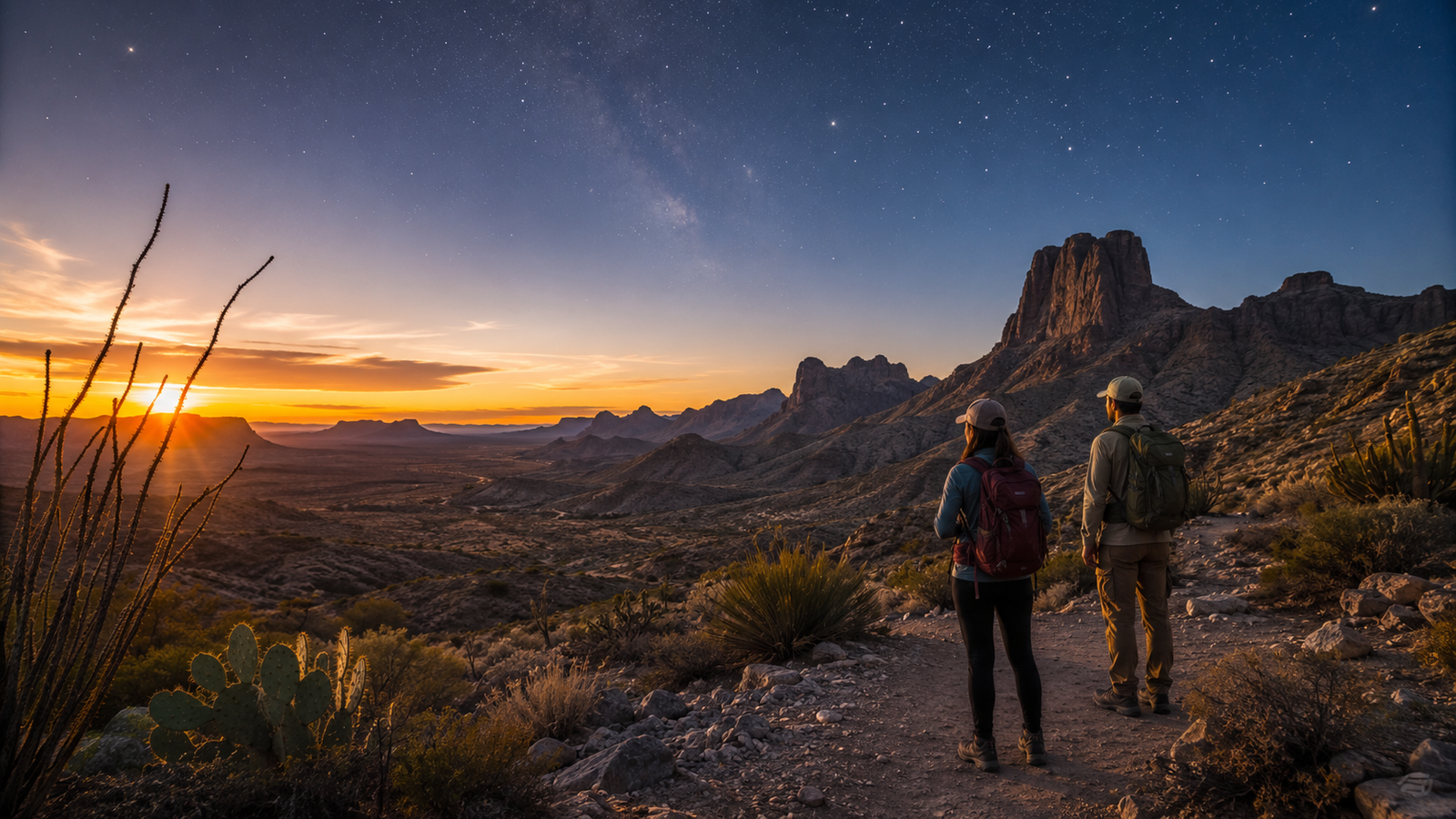
The best time to visit Big Bend National Park is generally from October through November or February through March. These months usually provide comfortable hiking temperatures, clear night skies, and better access to the park’s desert, river, and mountain environments.
October and November offer the strongest overall balance of mild weather and manageable crowds. February and March are also excellent for hiking, although spring is one of the park’s busiest periods.
December and January are ideal for travelers who prefer quieter trails and cool desert conditions, but freezing nights are possible. Summer can bring extreme heat to lower elevations, making May through August unsuitable for many exposed desert hikes. The rainy season generally runs from July through September and can produce thunderstorms and flash flooding.
Best Time to Visit Big Bend at a Glance
| Travel priority | Best time |
|---|---|
| Best overall conditions | October–November |
| Comfortable hiking | February–March and October–November |
| Fewer crowds | Early December, January weekdays, and September |
| Stargazing | Clear nights near a new moon throughout the year |
| Mild winter escape | December–February |
| Mountain hiking | Spring, fall, and cooler summer mornings |
| Desert hiking | November–March |
| Wildflowers and spring scenery | March–April |
| Avoiding extreme heat | October–April |
| Lowest-elevation river areas | Late fall through early spring |
Big Bend’s primary visitor season runs from October through April. Thanksgiving, Christmas and New Year, spring break, and holiday weekends bring particularly high demand for lodging, campsites, parking, and popular trails.
Why Timing Matters in Big Bend
Big Bend is not one uniform desert environment.
Elevations range from below 1,800 feet near the Rio Grande to almost 8,000 feet in the Chisos Mountains. A comfortable morning in the mountains can coincide with dangerous heat near the river or desert floor.
The National Park Service warns that general forecasts often represent Panther Junction rather than the entire park. Lower desert and river areas may be around 10°F hotter, while higher parts of the Chisos Mountains can be considerably cooler.
Your ideal month therefore depends on what you plan to do:
- Desert hiking requires cool daytime temperatures.
- Mountain hiking can remain possible later into warm weather.
- Stargazing depends on clouds, moonlight, and visibility.
- River activities depend on current water and weather conditions.
- Camping requires preparation for major day-to-night temperature changes.
- Popular trips require advance lodging or campsite reservations.
Big Bend Weather by Month
The temperatures below represent an elevation of approximately 5,401 feet, similar to the Chisos Basin. Lower desert areas can be much hotter, especially from late spring through early fall.
| Month | Average high | Average low | General conditions |
|---|---|---|---|
| January | 59°F | 37°F | Cool days and cold nights |
| February | 63°F | 41°F | Mild hiking weather |
| March | 70°F | 46°F | Warm, pleasant, and busy |
| April | 77°F | 53°F | Warmer days and increasing heat |
| May | 84°F | 62°F | Very hot at lower elevations |
| June | 88°F | 66°F | Extreme desert heat |
| July | 87°F | 67°F | Hot with thunderstorms possible |
| August | 87°F | 66°F | Hot, humid periods and monsoon storms |
| September | 80°F | 61°F | Gradual cooling with storm risk |
| October | 74°F | 53°F | Excellent hiking conditions |
| November | 65°F | 45°F | Mild days and cooler nights |
| December | 61°F | 41°F | Comfortable days and cold evenings |
These figures should not be interpreted as park-wide forecasts. Temperatures near Santa Elena Canyon, Rio Grande Village, Boquillas Canyon, and other low-elevation areas can be substantially higher.
Big Bend in January
January is one of the best months for lower-elevation hiking.
Daytime temperatures are often comfortable, while nighttime conditions may fall below freezing. Snow is rare and usually light, but cold fronts can cause abrupt changes in temperature. Winter visitors should carry layers rather than assuming that West Texas remains warm throughout the season.
January is best for:
- Santa Elena Canyon
- Boquillas Canyon
- Rio Grande Village Nature Trail
- Ross Maxwell Scenic Drive
- Desert photography
- Cool-weather camping
- Stargazing
Holiday demand normally drops after New Year, making later January quieter than Christmas week. Weekdays are preferable if you want easier parking and a greater sense of solitude.
Main drawback
Shorter daylight limits how much of the park you can explore in one day. Nighttime temperatures may also feel unexpectedly cold to visitors arriving from warmer parts of Texas.
Big Bend in February
February provides some of the park’s most comfortable hiking weather.
Average conditions in the Chisos Basin are mild, and lower-elevation desert hikes are generally more practical than they become later in spring. It is a strong month for combining mountain trails, canyon walks, scenic drives, and nighttime photography.
February is best for:
- Lost Mine Trail
- Window Trail
- Desert nature walks
- Birdwatching
- Camping
- Stargazing
- Scenic drives
Visitor numbers begin increasing as spring approaches. Reserve lodging and campsites rather than expecting to find space after arriving.
Big Bend in March
March offers excellent temperatures but brings some of the largest crowds of the year.
Spring break can create full campgrounds, busy trailheads, traffic control, and delays at Lost Mine Trail, Chisos Basin, Santa Elena Canyon, Hot Springs, and other popular areas. The park may use one-in, one-out parking control when lots reach capacity.
March is best for:
- Mountain hiking
- Desert hiking
- Wildflower viewing when conditions cooperate
- Scenic drives
- Camping
- Ranger programs
- Stargazing
How to avoid the worst crowds
Start hikes early, travel on weekdays, avoid spring-break periods, and prepare alternate destinations in case a parking area is full.
March is one of the best times to visit Big Bend National Park for weather, but not necessarily for solitude.
Big Bend in April
April remains suitable for many activities, but lower desert areas become increasingly warm.
Morning hiking may still be comfortable, while exposed afternoon trails can feel hot. Longer desert routes should begin early, and hikers must carry enough water rather than expecting springs or other natural sources to be dependable.
April is best for:
- Early-morning hikes
- Chisos Mountains trails
- Scenic drives
- Birdwatching
- Short canyon walks
- Evening stargazing
April is also part of the busy spring season, particularly around weekends and holidays.
Big Bend in May
Summer heat begins in May.
The desert floor can rise well above 100°F by late morning, even when conditions appear more moderate around Panther Junction or the Chisos Basin. The National Park Service considers May through August the hottest period.
May may still work for:
- Short walks shortly after sunrise
- Chisos Mountains hikes during suitable conditions
- Scenic drives in an air-conditioned vehicle
- Visitor-center stops
- Stargazing after temperatures fall
Avoid:
- Long exposed desert hikes
- Midday activity
- Routes without shade
- Itineraries based only on mountain forecasts
Summer visitors should change plans whenever the heat exceeds their experience or preparation.
Big Bend in June
June is generally the most difficult month for hiking at lower elevations.
Dry heat, intense sunlight, and limited natural water make exposed trails dangerous. Hikers can lose significant amounts of water during activity, and emergency assistance may be delayed by the park’s remote terrain. Big Bend recommends carrying at least one gallon of water per person per day.
Better June activities include:
- Sunrise viewpoints
- Short mountain walks
- Scenic driving
- Fossil Discovery Exhibit
- Visitor centers
- Night-sky observation
- Resting during midday heat
Do not attempt a strenuous itinerary simply because the trail distance appears manageable.
Big Bend in July
July remains extremely hot, but it also marks the beginning of the park’s summer rainy season.
Afternoon and evening thunderstorms can briefly cool the landscape. However, locally heavy rain may create flash flooding in washes, canyons, and low-water crossings.
July considerations
- Begin any activity very early.
- Avoid narrow canyons when thunderstorms are possible.
- Do not cross flooded roads.
- Monitor current weather and park alerts.
- Select high-elevation activities when conditions permit.
- Keep a backup plan that does not involve hiking.
Santa Elena Canyon Trail may become difficult or impassable after flooding because hikers must cross Terlingua Creek near the beginning of the route.
Big Bend in August
August resembles July: high temperatures, summer storms, humidity after rainfall, and changing road or trail conditions.
The Chisos Mountains can be cooler than the desert floor, but they are not free from lightning, heavy rain, or heat-related risk.
August is better suited to:
- Short sunrise hikes
- Scenic drives
- High-elevation walks
- Storm watching from a safe developed area
- Night photography when skies clear
This is not the best time for a first desert backpacking trip.
Big Bend in September
September is a transitional month.
Temperatures gradually become more manageable, but hot days and monsoon storms remain possible. Late September may offer a useful balance for experienced visitors who want fewer people and can adapt their itinerary to changing weather.
September is best for:
- Early mountain hikes
- Scenic drives
- Photography after summer rain
- Quieter campgrounds
- Stargazing
- Flexible trips without fixed long hikes
Visitors should continue treating low-elevation afternoon heat seriously.
Big Bend in October
October is arguably the best month to visit Big Bend National Park.
Temperatures become comfortable enough for a wider variety of hikes, nights remain relatively mild, and the busiest holiday periods have not yet arrived.
October is best for:
- Lost Mine Trail
- Window Trail
- Santa Elena Canyon
- Ross Maxwell Scenic Drive
- Desert and mountain camping
- Backcountry hiking
- Stargazing
- Multi-day itineraries
Early October can still be warm at low elevations, so longer desert hikes should continue to begin in the morning.
Big Bend in November
November provides some of the most reliable conditions for hiking throughout the park.
Cooler temperatures make lower-elevation desert trails more practical, while the Chisos Mountains remain accessible during ordinary weather. Nights become colder, but camping can still be comfortable with an appropriate sleep system.
November is best for:
- Full-day hiking
- Canyon walks
- Scenic drives
- Photography
- River-area exploration
- Camping
- Night-sky viewing
Thanksgiving week is particularly busy. Travel earlier in the month for fewer crowds.
Big Bend in December
December combines mild daytime conditions, cold nights, and excellent opportunities for winter stargazing.
The Christmas and New Year period is one of the busiest times of the year, but early December may be relatively quiet.
December is best for:
- Desert hiking
- Short mountain trails
- Winter camping
- Stargazing
- Scenic road trips
- Travelers avoiding summer heat
Prepare for freezing temperatures, strong winds, and rapidly changing conditions.
Best Time for Hiking in Big Bend
The strongest hiking periods are generally:
- October through November
- February through March
- December and January
- Early April, with careful heat planning
Big Bend contains more than 150 miles of desert and mountain trails. The best route depends on season, fitness, elevation, and recent conditions.
Best cool-season hikes
Santa Elena Canyon Trail
This approximately 1.4-mile round-trip route leads into one of the park’s most recognizable canyons. It works well during cooler months, although access can be affected by water or mud in Terlingua Creek.
Lost Mine Trail
Lost Mine Trail is one of Big Bend’s most popular mountain hikes. Its elevation makes it cooler than lower desert routes, but the parking area frequently fills during busy periods.
Window Trail
The Window Trail covers approximately 5.6 miles round trip. It descends through Oak Creek Canyon before reaching the Window pour-off, meaning the return journey is uphill. The exposed slickrock near the pour-off has no railing.
South Rim
The South Rim route is a strenuous hike of approximately 12 to 14.5 miles with about 2,000 feet of elevation gain. Seasonal trail closures may apply to protect nesting peregrine falcons.
Window View Trail
This paved 0.3-mile trail provides an easier introduction to the Chisos Basin and is a popular location for sunset views.
Best Time for Stargazing in Big Bend
Big Bend offers outstanding stargazing throughout the year.
The park has exceptionally low light pollution and was designated an International Dark Sky Park in 2012. The National Park Service describes it as having the darkest measured night skies of any national park in the lower 48 states.
For the darkest experience, plan your visit around:
- A new moon
- A clear, cloud-free forecast
- Low humidity
- A location away from developed lighting
- A night without wildfire smoke or blowing dust
Recommended stargazing locations
The National Park Service recommends several accessible areas with open views:
- Fossil Discovery Exhibit
- Sotol Vista
- Rio Grande Overlook
- Dugout Wells
- Backcountry campsites
Use a red headlamp instead of bright white light so your eyes remain adapted to darkness. Bring a chair, warm layer, binoculars, and a downloaded star chart.
Even warm daytime trips can become cold after sunset, particularly in winter and at higher elevations.
When Is Big Bend Least Crowded?
The quietest practical periods are often:
- Early December before the holidays
- January weekdays after New Year
- September, provided you can manage heat and storms
- Early October weekdays
- Late April weekdays, with careful heat planning
The primary visitor season is October through April. Campgrounds and lodging are especially difficult to secure from November through April, and parking can fill at the most popular trails and scenic locations.
All developed park campgrounds require reservations. There is no first-come, first-served camping in Big Bend National Park.
How Many Days Do You Need in Big Bend?
Three days are enough for a useful first visit, although four or five days provide a more comfortable pace.
Big Bend is too large to explore properly in one day. Driving between the Chisos Basin, Ross Maxwell Scenic Drive, Santa Elena Canyon, Rio Grande Village, and Boquillas Canyon takes considerable time.
One-day itinerary
- Drive Ross Maxwell Scenic Drive.
- Stop at overlooks and historic sites.
- Hike Santa Elena Canyon.
- Visit the Chisos Basin.
- Walk Window View Trail.
- Stargaze after sunset.
The National Park Service recommends Ross Maxwell Scenic Drive and the Chisos Basin as the foundation of a one-day visit.
Three-day itinerary
Day 1: Chisos Mountains
- Lost Mine Trail or Window Trail
- Chisos Basin viewpoints
- Window View sunset
- Night-sky viewing
Day 2: Ross Maxwell Scenic Drive
- Sam Nail Ranch
- Homer Wilson Ranch
- Sotol Vista
- Castolon
- Santa Elena Canyon
Day 3: Eastern side of the park
- Dugout Wells
- Rio Grande Village Nature Trail
- Boquillas Canyon
- Rio Grande overlook at sunset
This three-area structure closely follows the park’s recommended itinerary for a multi-day first visit.
Current Chisos Basin Access
A major Chisos Basin closure had previously been planned for May 2026. However, the National Park Service announced on April 1, 2026, that the construction would not proceed as scheduled and the previously planned visitor closure would not take place.
As of that announcement, Big Bend National Park and the Chisos Basin remained open.
Because construction plans and water conditions can change, check the park’s current alerts shortly before traveling.
What to Pack for Big Bend
Water
Carry at least one gallon of water per person per day, and more when completing long hikes or visiting during warm weather. Natural springs are unreliable and should not form the basis of your plan.
Clothing
Bring:
- Wide-brimmed hat
- Sun-protective shirt
- Hiking pants or shorts
- Warm insulating layer
- Wind-resistant jacket
- Rain shell
- Comfortable hiking footwear
- Spare socks
Big Bend can shift from hot sun to freezing winter temperatures, depending on elevation and time of day.
Navigation and emergency supplies
Carry:
- Offline park map
- Paper backup map
- Headlamp
- First-aid supplies
- Emergency communication device
- Extra food
- Vehicle emergency equipment
- Spare tire
- Sufficient fuel
Cell service is unreliable throughout much of the park, although limited coverage may be available near Panther Junction and the Chisos Basin.
Common Planning Mistakes
Visiting in summer with a winter itinerary
Trails suitable in January may become dangerous in June.
Underestimating driving distances
The park’s major areas are widely separated. One day is not enough to complete several long hikes and scenic drives.
Arriving without accommodation
All park campgrounds require reservations, and developed sites commonly fill during the main visitor season.
Using only one weather forecast
Conditions at Panther Junction do not represent the Rio Grande or higher Chisos Mountains.
Planning stargazing during a bright moon
A nearly full moon can illuminate the desert beautifully, but it reduces the visibility of faint stars and the Milky Way.
Depending on natural water
Carry the water you need instead of assuming a spring, creek, or tank will be available.
Starting hikes too late
Begin early enough to avoid afternoon heat, darkness, and summer thunderstorms.
Frequently Asked Questions
What is the best month to visit Big Bend National Park?
October is the best overall month for most visitors because temperatures are generally comfortable for hiking, nights are suitable for stargazing, and holiday crowds have not yet reached their peak. November is an equally strong option outside Thanksgiving week.
Is March a good time to visit Big Bend?
Yes. March usually provides excellent hiking weather, but it is also one of the busiest periods because of spring break. Reserve campsites and lodging early and start popular hikes in the morning.
Is Big Bend too hot in summer?
Lower desert areas can exceed 100°F by late morning from May through August. Short, early activities may remain possible, particularly at higher elevations, but long exposed hikes are generally unsafe during extreme heat.
What is the best time for stargazing in Big Bend?
Clear nights near a new moon provide the darkest conditions. Stargazing is possible year-round, but fall, winter, and spring often provide a more comfortable combination of nighttime temperatures and daytime hiking.
How many days do you need at Big Bend?
Three days are enough for a first visit covering the Chisos Mountains, Ross Maxwell Scenic Drive, Santa Elena Canyon, and the eastern Rio Grande area. Four or five days provide more flexibility.
Does it snow in Big Bend?
Snow is possible but is usually rare and light. Higher elevations are more likely to experience winter weather, while daytime desert temperatures can remain mild.
When is Big Bend most crowded?
The primary visitor season runs from October through April. Thanksgiving, Christmas and New Year, spring break, and holiday weekends are particularly busy.
Do I need camping reservations at Big Bend?
Yes. All developed park campgrounds require reservations, and there are no first-come, first-served developed campsites. Overnight backcountry use also requires a permit.
Can you see the Milky Way at Big Bend?
Yes. Big Bend’s exceptionally dark skies provide outstanding opportunities to view the Milky Way when the sky is clear and moonlight is limited. Visibility still depends on season, clouds, smoke, dust, and the moon phase.
What are the hottest months in Big Bend?
May through August are the hottest months. Lower desert and Rio Grande areas are significantly hotter than higher parts of the Chisos Mountains.
Final Thoughts
The best time to visit Big Bend National Park depends on whether you prioritize hiking, stargazing, solitude, or mild weather.
Choose:
- October or November for the best overall trip
- February or March for comfortable hiking
- December or January for cool desert conditions
- September or early December for fewer crowds
- A clear new-moon night for the darkest stargazing
- May through August only with strict heat precautions
Big Bend rewards travelers who build flexibility into their itinerary.
Check the forecast for the exact elevation you plan to visit, reserve accommodation before driving into the region, carry more water than you expect to need, and replace exposed hikes with scenic drives when conditions become unsafe.
The park’s mountains, desert, river canyons, and dark skies can feel like separate destinations. Giving Big Bend at least three days and choosing the right season allows you to experience each environment without rushing.
Editorial Research Note
Xplore Terrainz reviewed current planning, weather, hiking, stargazing, reservation, and access guidance from Big Bend National Park and the National Park Service. Weather, trails, river crossings, facilities, construction plans, fire rules, and camping availability can change. Check current park alerts before traveling.