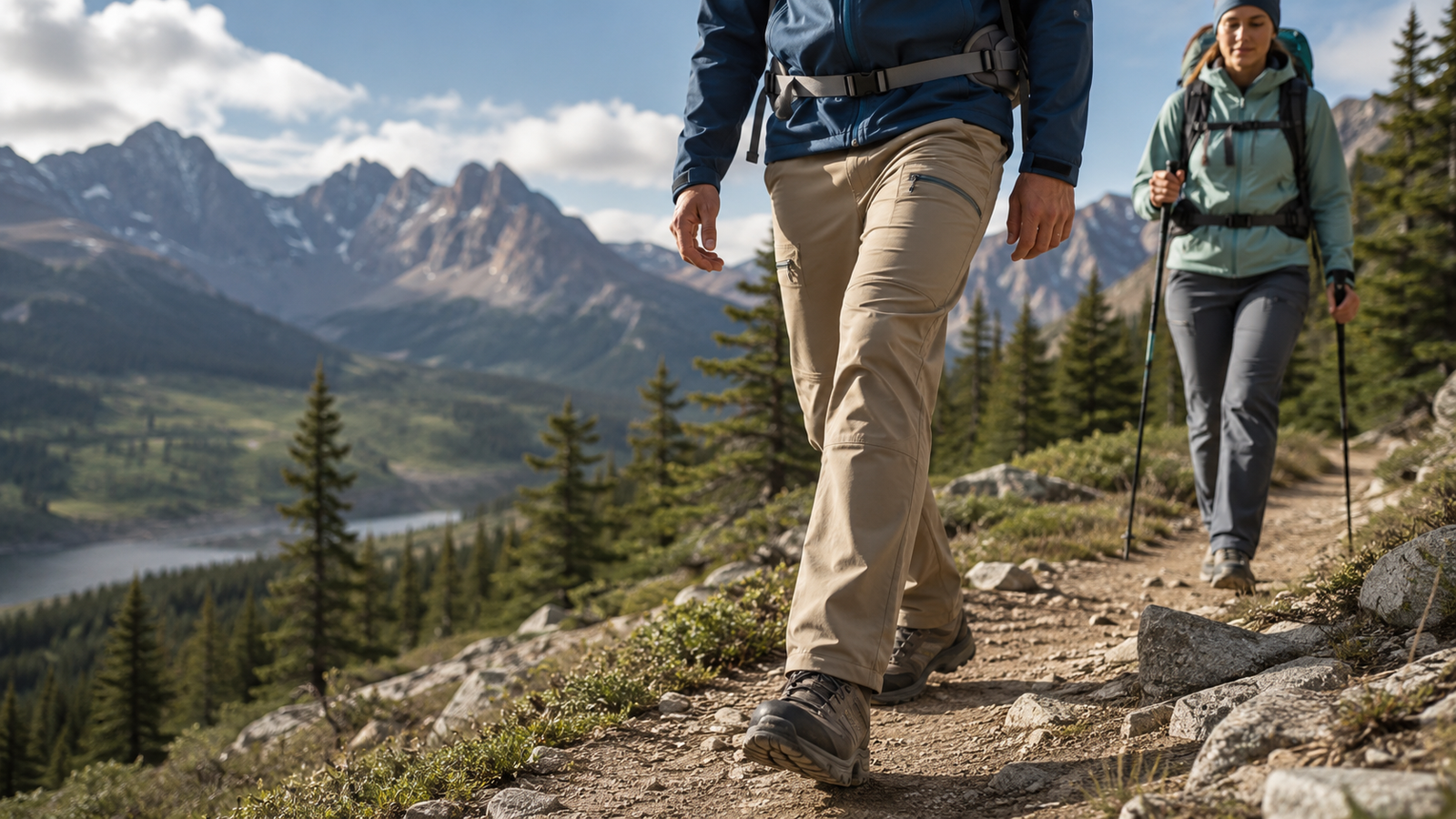
The best hiking pants should move comfortably, dry faster than ordinary trousers, protect your legs from sun and trail debris, and match the conditions in which you actually hike.
Our best overall choice is the Outdoor Research Ferrosi Pant because it combines excellent stretch, low weight, Breathability, and enough durability for hiking, climbing, and travel. The REI Co-op Trailmade Pants provide the strongest value for beginners, while the Arc’teryx Gamma Pant is better suited to cool, windy, and abrasive mountain conditions.
For hot-weather hiking, consider the Patagonia Terravia Trail or Columbia Silver Ridge Utility Convertible. Hikers prioritizing rugged trekking durability may prefer the Fjällräven Abisko Lite Trekking Trousers.
Before planning your next trip, review our Camping Essentials Checklist for Beginners to make sure your clothing, footwear, navigation equipment, shelter, and emergency supplies work together.
Best Hiking Pants at a Glance
| Hiking pants | Best for | Key strengths | Main limitation |
|---|---|---|---|
| Outdoor Research Ferrosi | Best overall | Stretch, Breathability, versatility | Light fabric offers limited warmth |
| REI Co-op Trailmade | Best value | Affordable, quick-drying, UPF 50+ | Less technical than premium options |
| Patagonia Quandary | Hiking and travel | Clean styling, sun protection, mobility | Not designed for sustained rain |
| Arc’teryx Gamma | Cool and windy trails | Durable softshell, wind resistance, stretch | Expensive and warm for summer |
| Columbia Silver Ridge Utility Convertible | Convertible option | Converts to shorts, UPF 50, quick drying | Zippers may feel bulky |
| Fjällräven Abisko Lite Trekking | Rugged trekking | Durable panels, ventilation, useful pockets | Heavy and expensive |
| prAna Stretch Zion/Halle Straight | Comfort and casual use | Stretch, trail-to-town appearance | Fit may not suit every body type |
| Patagonia Terravia Trail | Fast and hot-weather hiking | Lightweight, breathable, fast drying | Less protective in cold conditions |
How We Selected the Best Hiking Pants
This is a research-based buying guide. Xplore Terrainz has not claimed first-hand field testing of every product listed.
We compared:
- Current manufacturer specifications
- Fabric composition
- Stretch and articulation
- Breathability
- Drying performance
- Sun protection
- Light-weather resistance
- Pocket design
- Available fits and inseam lengths
- Suitability for day hiking, backpacking, travel, and mountain terrain
- Recent independent product testing
- Current availability as of 2026
Prices, colors, sizing, and product specifications can change. Confirm current information with the manufacturer or retailer before purchasing.
1. Outdoor Research Ferrosi Pant
Best Overall Hiking Pants
Best for: Day hiking, backpacking, climbing, travel, and warm-to-mild conditions
Available for: Men and women
Primary strengths: Stretch, ventilation, quick drying, and freedom of movement
The Outdoor Research Ferrosi is the strongest all-around choice for hikers who need one pair of pants for several outdoor activities.
Ferrosi fabric is lightweight, quick-drying, wind- and water-resistant, and highly stretchy. Outdoor Research also gives the fabric its highest listed stretch rating and a UPF rating of 50. Articulated knees and adjustable features improve movement on steep trails, while the relatively thin material remains more comfortable than heavy softshell fabric during active hiking.
Independent 2026 testing also identified the Ferrosi as particularly suitable for hikers who prioritize Breathability, mobility, and warm-weather performance.
Why it stands out
- Excellent freedom of movement
- Lightweight and breathable
- Quick-drying fabric
- UPF 50 protection
- Useful for hiking, climbing, and travel
- Adjustable cuffs
- Men’s and women’s versions
- Comfortable during high-output activity
Possible drawbacks
The thin fabric does not provide much warmth. It may also offer less protection than heavier pants when bushwhacking through thorny vegetation or repeatedly kneeling against sharp rock.
Water resistance is suitable for light moisture, but the Ferrosi is not a replacement for waterproof rain pants.
Verdict
Choose the Ferrosi when you want one versatile pair of lightweight hiking pants for most three-season trail conditions.
2. REI Co-op Trailmade Pants
Best Budget Hiking Pants
Best for: Beginners, everyday day hikes, travel, and moderate weather
Available for: Men and women
Primary strengths: Value, sun protection, comfort, and accessible sizing
The REI Co-op Trailmade is a practical entry-level option that includes many features usually expected from more expensive hiking pants.
The men’s version uses breathable nylon-spandex fabric that dries quickly and includes a PFAS-free water-repellent finish, UPF 50+ protection, articulated knees, a gusseted crotch, and a secure thigh pocket. The women’s pull-on version uses similar quick-drying stretch fabric. It offers a flexible waistband, six pockets, multiple lengths, and an inclusive cut with additional room around the hips and thighs.
REI’s staff selection also highlighted the Trailmade line as a wallet-friendly option with abrasion resistance, articulation, sun protection, and practical trail performance.
Why it stands out
- Lower price than most premium options
- Quick-drying stretch fabric
- UPF 50+ protection
- Light water resistance
- Articulated knees
- Multiple pockets
- Broad size availability
- Good choice for beginners
Possible drawbacks
The Trailmade does not have the same refined fabric feel or weather protection as the Ferrosi, Gamma, or premium trekking trousers.
Some users may find the men’s cut slightly loose, while the women’s pull-on waistband may be less suitable for anyone who prefers a traditional button and zipper closure.
Verdict
The Trailmade is one of the best hiking pants for beginners who need reliable performance without investing in a highly technical pair.
3. Patagonia Quandary Pants
Best Hiking Pants for Travel
Best for: Hiking trips, sightseeing, road trips, and trail-to-town use
Available for: Men and women
Primary strengths: Clean appearance, useful pockets, mobility, and sun protection
The Patagonia Quandary works well for travellers who want technical trail performance without a heavily styled cargo or mountaineering appearance.
The men’s version uses a stretch-woven blend of recycled nylon and spandex, a water-repellent finish made without intentionally added PFAS, and UPF 40+ sun protection. Articulation behind the knees improves mobility, while roll-up cords allow the lower legs to be secured during warm conditions or shallow water crossings.
Patagonia’s women’s Quandary uses the same lightweight recycled nylon and spandex blend, UPF 40+ coverage, and water-repellent treatment, with a contoured waistband and women-specific fit.
Why it stands out
- Looks suitable for both trails and towns
- Light and moderately stretchy
- UPF 40+ protection
- Resists light moisture
- Secure zippered pockets
- Men’s and women’s versions
- Different inseam lengths
- Easy to include in a travel wardrobe
Possible drawbacks
The Quandary is not as stretchy as the Ferrosi and not as protective as a heavier softshell.
The women’s fit has received mixed customer feedback, so checking current measurements and trying more than one size may be worthwhile.
Verdict
Choose the Quandary when your hiking trip also includes flights, restaurants, towns, scenic drives, or other situations where traditional cargo-style trail pants may feel overly technical.
4. Arc’teryx Gamma Pant
Best for Cool, Windy, and Rocky Trails
Best for: Alpine hiking, climbing, cool weather, wind, and rough terrain
Available for: Men and women
Primary strengths: Weather resistance, durability, stretch, and mountain performance
The Arc’teryx Gamma is a warmer softshell pant for hikers who need more protection than lightweight summer trousers provide.
Arc’teryx describes the Gamma as a weather-resistant, breathable, abrasion-resistant softshell with four-way stretch. Its fabric sheds light rain and wind, while adjustable cuffs help prevent drafts and trail debris from entering around hiking boots.
The stronger and warmer construction makes the Gamma suitable for:
- Exposed mountain ridges
- Cool spring and autumn hiking
- Scrambling
- Climbing approaches
- Windy plateaus
- Rough trails
- Light snow travel
Recent independent comparisons also identified the Gamma as a leading option where hikers want a combination of durability, mobility, and weather resistance.
Why it stands out
- Strong wind resistance
- Durable softshell material
- Four-way stretch
- Abrasion resistance
- Light warmth
- Adjustable cuffs
- Good mobility for scrambling
- Secure zippered storage
Possible drawbacks
The Gamma is one of the most expensive pants in this guide.
It can also feel unnecessarily warm during humid summer hikes, desert conditions, or fast uphill travel. Hikers who mainly explore hot climates should consider the Ferrosi or Terravia Trail instead.
Verdict
Choose the Gamma when protection from wind, cold, and rough mountain terrain matters more than maximum ventilation or low cost.
5. Columbia Silver Ridge Utility Convertible Pants
Best Convertible Hiking Pants
Best for: Hot weather, changing temperatures, travel, and hikers who want pants and shorts in one
Available for: Men and women
Primary strengths: Convertible legs, sun protection, moisture management, and accessible pricing
The Columbia Silver Ridge Utility Convertible turns from full-length hiking pants into shorts by removing the lower legs.
The men’s model includes UPF 50 sun protection, moisture-wicking fabric, two-way stretch, articulated knees, a gusseted crotch, multiple storage pockets, and zip-off legs that create shorts with a nine-inch inseam. It is made from recycled polyester and includes a removable belt.
The women’s version also uses light, breathable recycled material. It converts into shorts, making it practical for trips that begin in cool morning conditions and become hot later in the day.
Why it stands out
- Pants and shorts in one garment
- UPF 50 sun protection
- Quick-drying performance
- Moisture-wicking fabric
- Multiple pockets
- Articulated knees
- Removable belt
- Useful for travel with limited luggage
Possible drawbacks
Convertible-leg zippers can feel bulky around the thighs or knees. Some hikers also find that detached legs are easy to misplace.
Converting pants into shorts while wearing boots can be inconvenient unless the ankle openings are wide enough to pass over footwear.
Verdict
The Silver Ridge is the best option for hikers who value temperature versatility more than streamlined styling.
6. Fjällräven Abisko Lite Trekking Trousers
Best for Rugged Multiday Trekking
Best for: Long treks, rough trails, brush, insects, and hikers carrying larger packs
Available for: Men and women
Primary strengths: Durability, ventilation, pockets, and trail protection
The Fjällräven Abisko Lite Trekking Trousers combine stretch panels with the brand’s lighter G-1000 Lite fabric.
Fjällräven describes the trousers as durable, fast-drying, and well ventilated, with a technical cut, substantial storage pockets, adjustable lower legs, boot hooks, and fabric designed for warm trekking conditions. Men’s and women’s versions are available.
Unlike minimalist hiking trousers, the Abisko Lite is designed for hikers who expect their pants to protect against:
- Rough vegetation
- Rocky surfaces
- Insects
- Repeated pack use
- Longer trips
- Variable trail conditions
Why it stands out
- Durable trekking construction
- Stretch panels for movement
- Stronger fabric in high-wear areas
- Useful thigh pockets
- Adjustable leg openings
- Boot hooks
- Good ventilation for its protection level
- Built for extended trail use
Possible drawbacks
The Abisko Lite is expensive and heavier than simple nylon hiking pants.
Its technical appearance and large pockets may also feel excessive for short local walks, casual travel, or hikers who prefer understated clothing.
Verdict
Choose the Abisko Lite when durability, storage, and long-distance trekking performance are more important than minimum weight.
7. prAna Stretch Zion Relaxed Pant and Halle Straight Pant
Best for Stretch and Everyday Comfort
Best for: Hiking, travel, casual outdoor wear, and hikers who prioritize comfort
Available as: Stretch Zion Relaxed Pant for men and Halle Straight Pant for women
Primary strengths: Soft stretch, casual styling, sun protection, and versatility
The prAna Stretch Zion and Halle lines are popular because they feel closer to everyday trousers than many technical hiking pants.
The men’s Stretch Zion Relaxed Pant uses a recycled nylon and elastane blend with two-way stretch, moisture-wicking performance, UPF 50+ protection, a water-repellent finish, an adjustable waist, a ventilated gusset, and a secure cargo pocket.
The women’s Halle Straight Pant uses a similar nylon-elastane fabric with UPF 50+, water repellency, abrasion resistance, articulated knees, a zippered side pocket, and short, regular, and tall inseam options.
Why they stand out
- Comfortable two-way stretch
- Casual trail-to-town appearance
- UPF 50+ protection
- Light water resistance
- Abrasion-resistant fabric
- Secure storage
- Multiple inseams
- Suitable for travel and daily wear
Possible drawbacks
The Stretch Zion Relaxed Pant has a roomier silhouette that may not appeal to hikers who prefer a close athletic fit.
The Halle Straight has a low-rise waist, which may sit awkwardly beneath some backpack hip belts. Fit is highly personal, so trying the pants with your backpack is helpful.
Verdict
Choose the Stretch Zion or Halle when comfort, casual styling, and versatile use matter more than ultralight weight.
8. Patagonia Terravia Trail Pants
Best Lightweight Hiking Pants for Fast Movement
Best for: Summer hiking, fast-paced day hikes, humid climates, and high-output activity
Available for: Men and women
Primary strengths: Breathability, low weight, stretch, and fast drying
The Patagonia Terravia Trail is designed for hikers who move quickly and generate substantial body heat.
Patagonia describes the fabric as light, stretchy, fast-drying, and capable of releasing heat during active hiking. The men’s and women’s versions are offered in multiple inseam lengths and are intended for trail use ranging from fast singletrack to backcountry travel.
Recent field testing also identified the Terravia Trail as a strong option for warm-weather hiking and fast movement because its thin fabric manages moisture and heat effectively.
Why it stands out
- Very breathable
- Lightweight construction
- Dries quickly
- Stretch supports long strides
- Appropriate for humid conditions
- Men’s and women’s versions
- Different inseam lengths
- Packs easily for travel
Possible drawbacks
Thin fabric provides less insulation and wind protection than the Gamma.
It may also show wear faster than heavier trekking pants if used repeatedly for bushwhacking or rough scrambling.
Verdict
Choose the Terravia Trail when staying cool and moving efficiently are more important than warmth or heavy-duty protection.
Which Hiking Pants Should You Choose?
Choose the Outdoor Research Ferrosi if:
- You want one versatile pair
- Stretch is a priority
- You hike in warm or mild conditions
- You also climb or travel
- You prefer lightweight fabric
Choose the REI Trailmade if:
- You are buying your first hiking pants
- Your budget is limited
- You want UPF 50+ protection
- You mainly complete day hikes
- Inclusive sizing matters
Choose the Patagonia Quandary if:
- You want trail-to-town styling
- You travel frequently
- You prefer a cleaner appearance
- Light moisture resistance is enough
- You need several pocket options
Choose the Arc’teryx Gamma if:
- You hike in wind and cool weather
- You scramble over rock
- Durability matters more than price
- You want a warmer softshell
- You frequently explore mountain terrain
Choose the Columbia Silver Ridge Convertible if:
- You want pants and shorts in one
- Temperatures change throughout the day
- You hike in strong sun
- You prefer several cargo pockets
- You want a relatively affordable option
Choose the Fjällräven Abisko Lite if:
- You complete multiday treks
- You hike through brush or insects
- You need substantial pockets
- You wear trekking boots
- You prioritize long-term durability
Choose prAna Stretch Zion or Halle if:
- Comfort is your main concern
- You want casual styling
- You use hiking clothes for travel
- You prefer softer fabric
- You need different inseam options
Choose the Patagonia Terravia Trail if:
- You hike quickly
- You overheat easily
- You explore hot or humid regions
- Low weight matters
- You want fast-drying fabric
How to Choose the Best Hiking Pants
1. Match the Fabric to the Conditions
Most hiking pants use nylon, polyester, elastane, or a combination of these materials.
Nylon
Nylon is commonly used because it can be:
- Durable
- Lightweight
- Quick drying
- Abrasion resistant
- Comfortable with stretch added
Polyester
Polyester generally manages moisture well and dries quickly. It is frequently used in lightweight and convertible hiking trousers.
Elastane or spandex
A small percentage of elastane provides stretch. This improves comfort while:
- Stepping over logs
- Climbing steep trails
- Scrambling
- Kneeling
- Wearing a backpack
- Taking long strides
Cotton
Cotton can feel comfortable in dry heat, but it absorbs substantial moisture and dries slowly. Wet cotton clothing may contribute to uncomfortable cooling in cold or wet conditions, so synthetic materials are generally more dependable for variable-weather hiking.
2. Understand Water Resistance
Most ordinary hiking pants are water resistant, not waterproof.
A durable water-repellent finish can help light moisture bead on the fabric. It may be useful for:
- Brief showers
- Wet vegetation
- Drizzle
- Minor splashes
It will not keep you dry during prolonged or heavy rain.
DWR performance can also decrease as the garment becomes dirty or receives repeated use. Washing according to the manufacturer’s instructions and restoring the treatment when appropriate may improve water beading.
For sustained rain, carry separate waterproof rain pants.
3. Prioritise Mobility
Useful mobility features include:
- Stretch fabric
- Articulated knees
- Gusseted crotch
- Flexible waistband
- Adjustable waist
- Athletic or relaxed fit
- Shaped panels
Test the pants by:
- Raising each knee.
- Squatting.
- Taking a large step.
- Sitting on the ground.
- Wearing your backpack.
- Climbing stairs.
The waistband should remain secure without digging beneath your pack’s hip belt.
4. Consider breathability. Breathable hiking pants are generally more comfortable during:
- Summer
- Desert hiking
- Humid weather
- Long climbs
- Fast hiking
- Backpacking with a heavy load
Heavier softshell trousers are better for:
- Wind
- Cold temperatures
- Rough terrain
- Alpine environments
- Early spring and late autumn
- Light snow
One pair cannot maximize summer ventilation and winter protection. Choose according to your most common conditions.
5. Check Sun Protection
Full-length pants provide physical coverage, but fabric construction determines the exact level of ultraviolet protection.
Many hiking pants advertise UPF 40, UPF 50, or UPF 50+. A UPF rating applies only to the covered area, and protection may decrease when fabric is stretched, wet, worn, or damaged.
Sun-protective pants are especially useful for:
- Desert trails
- High elevations
- Exposed ridges
- Long summer hikes
- People sensitive to sunlight
6. Decide Whether You Need Convertible Pants
Convertible pants have removable lower legs.
Advantages
- Work as pants and shorts
- Useful during changing temperatures
- Reduce the amount of clothing packed
- Provide flexibility during travel
- Allow more ventilation
Disadvantages
- Zippers add weight and bulk
- Fit may feel awkward around the knees
- Detached legs must be stored
- Converting can be difficult over boots
- The styling is highly technical
Roll-up pants provide a middle option. They remain one garment but can be secured around the calves.
7. Evaluate the Pockets
More pockets are not automatically better.
Useful pocket features include:
- Zippered thigh pocket
- Deep hand pockets
- Secure phone storage
- Pocket placement that remains accessible beneath a backpack hip belt
- Low-profile seams
- Mesh pocket bags for ventilation
Avoid overloading pockets. Heavy items can swing while walking and may create pressure beneath backpack straps.
8. Select the Correct Fit
Hiking pants should be close enough to avoid catching on vegetation but loose enough to allow unrestricted movement.
Common fits include:
- Slim
- Athletic
- Regular
- Straight
- Relaxed
- Tapered
Do not choose only by your usual jeans size. Hiking brands may use different hip, thigh, rise, and inseam measurements.
When possible, try the pants with:
- Your hiking underwear
- Base layers
- Hiking boots
- Backpack
- Belt
- Phone in the intended pocket
Hiking Pants vs. Rain Pants
Hiking pants and rain pants perform different jobs.
Hiking pants provide:
- Breathability
- Stretch
- Comfort
- Trail durability
- Sun protection
- Light moisture resistance
Rain pants provide:
- Waterproof protection
- Wind blocking
- Storm coverage
- An outer shell over hiking clothing
Water-resistant hiking pants cannot replace waterproof rain trousers during sustained rain. Likewise, fully waterproof pants are usually too warm and restrictive for ordinary dry-weather hiking.
Carry packable rain pants when significant rain is possible.
Common Hiking-Pants Mistakes
Buying Pants That Are Too Tight
Stretch fabric does not correct a fundamentally restrictive fit. Tight thighs, hips, or knees can become uncomfortable during steep climbing.
Choosing Heavy Pants for Summer
Durable trekking trousers may feel protective in a shop but become excessively hot on exposed summer trails.
Assuming DWR Means Waterproof
A water-repellent finish is designed for light moisture, not continuous rain.
Ignoring Backpack Compatibility
A rigid belt, thick waistband, or raised pocket can become painful beneath a hip belt.
Carrying Too Much in the Pockets
Phones, keys, tools, and food can pull the fabric downward and interfere with natural walking.
Wearing Cotton Jeans on Wet or Cold Trips
Denim absorbs water, becomes heavy, dries slowly, and limits movement compared with technical stretch fabrics.
Skipping the Return Policy
Pant fit varies significantly by brand. Check return terms before removing labels or wearing the pants outside.
Frequently Asked Questions
What are the best hiking pants overall?
The Outdoor Research Ferrosi Pants are the strongest all-around option for most hikers because they are lightweight, stretchy, breathable, quick drying, and suitable for both trails and travel.
Should hiking pants be loose or tight?
Hiking pants should allow unrestricted movement without excess fabric catching on vegetation. A regular or athletic fit works for many hikers, but the correct cut depends on body shape and preferred layering.
Are hiking pants worth buying?
They are worthwhile for regular hikers because they generally dry faster, stretch more easily, manage moisture better, and provide more trail protection than jeans or ordinary cotton trousers.
Are convertible hiking pants worth it?
Convertible pants are useful when temperatures change significantly or when you want pants and shorts in one garment. They are less appealing to hikers who dislike the feel and appearance of leg zippers.
Are hiking pants waterproof?
Most hiking pants are water resistant rather than waterproof. They may shed light moisture, but prolonged rain generally requires separate waterproof rain pants.
What are the best hiking pants for hot weather?
The Outdoor Research Ferrosi and Patagonia Terravia Trail are strong hot-weather options because they use lightweight, breathable, quick-drying fabrics.
What are the best pants for cold-weather hiking?
The Arc’teryx Gamma is better for cool and windy conditions because its softshell material provides more warmth and weather resistance than thin summer hiking pants.
Can I hike in leggings?
Yes, particularly on maintained trails. However, leggings may provide less abrasion protection, fewer pockets, and lower resistance to thorns or rough rock than traditional hiking pants.
Are hiking pants good for travel?
Yes. Models such as the Patagonia Quandary and prAna Stretch Zion or Halle combine quick-drying trail fabrics with a relatively casual appearance suitable for flights, sightseeing, and restaurants.
How many pairs of hiking pants do I need?
One versatile pair is enough for most day hikers. Backpackers may carry one hiking pair and one lightweight base or sleep layer, washing and drying the hiking pants during longer trips.
Final Thoughts
The best hiking pants depend on the climate, terrain, trip length, and fit that feels comfortable on your body.
Choose the:
- Outdoor Research Ferrosi for the best overall balance
- REI Co-op Trailmade for affordable trail performance
- Patagonia Quandary for hiking and travel
- Arc’teryx Gamma for cool, windy, and rocky terrain
- Columbia Silver Ridge Utility Convertible for adaptable warm-weather use
- Fjällräven Abisko Lite Trekking for rugged multiday trips
- prAna Stretch Zion or Halle for comfort and casual versatility
- Patagonia Terravia Trail for fast, hot-weather hiking
Do not choose hiking pants based only on brand reputation or appearance.
Try them with your hiking footwear and backpack, squat and climb stairs, check the pocket placement, and consider the conditions in which you spend the most time.
A comfortable mid-priced pair that fits correctly will usually serve you better than premium technical pants designed for weather and terrain you rarely encounter.
Editorial Research Note
Xplore Terrainz reviewed current product information from Outdoor Research, REI Co-op, Patagonia, Arc’teryx, Columbia, Fjällräven, and prAna, along with independent 2026 hiking-pants comparisons. Product designs, prices, colors, sizes, and availability may change. Confirm the latest specifications before purchasing.